The Thing
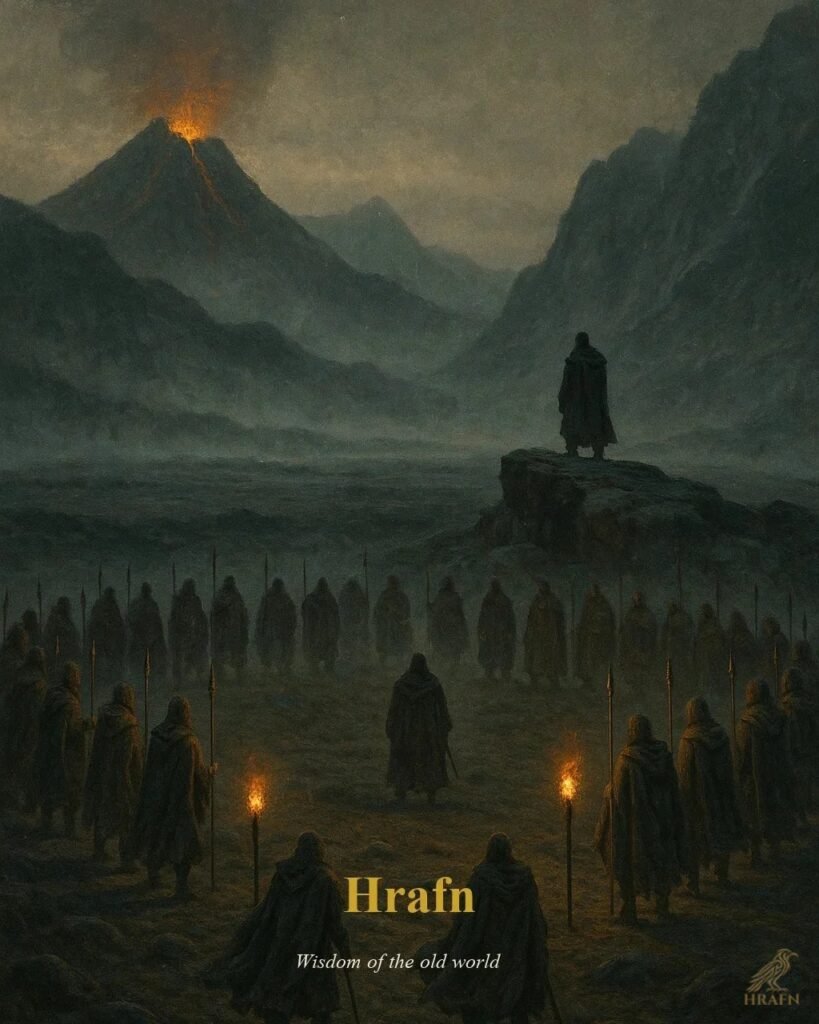
Picture a plain, bare and volcanic, with no throne, no crown. And yet, for two weeks each year, it rules the entire country. No king sits in judgment. Free men stand in a circle and decide for themselves what is just.
An Assembly Instead of a Ruler
The Norsemen called it the Thing. It was public assembly, court, and parliament all in one, always held at the same time each year. Iceland’s Althing arose around 930 AD on the plain of Þingvellir. That plain is a UNESCO World Heritage site today–and the Althing is considered one of the oldest still-existing parliamentary traditions in the world.
For two weeks, this bare plain became the capital of a country without a king. The Law Speaker stepped before the crowd and recited the law–from memory, year after year, long before anyone wrote the laws down. In disputes, the Lögrétta decided, a council of chieftains. A goði was a local leader holding both religious and political power.
A Model from Norway, Weapons Forbidden
The Althing didn’t invent its own model. It followed the Gulating assembly in western Norway. The same structure later appears in the Faroese Løgting.
At the Thing site, one law stood above all others: no weapons. In a world where feuds otherwise ended by the sword, this was neutral ground. Whoever argued here did it with words.
The harshest punishment drew no blood. A Thing could outlaw a man–cast him out of the community, make him an exile. No home anymore, no protection, no friends to stand up for him. Erik the Red faced this verdict not once but twice.
A Name That Lives On
The name Thing has not disappeared. It survives today in the Norwegian Storting and the Danish Folketing. An unbroken line from then to now cannot be proven. But the idea remained: the law does not belong to a ruler alone. The law belongs to those who come together to speak it.
Sources
The information on the Thing is based on Old Norse legal texts, including the Icelandic Grágás, on sagas, and on archaeological findings from thing sites.