Leif Erikson
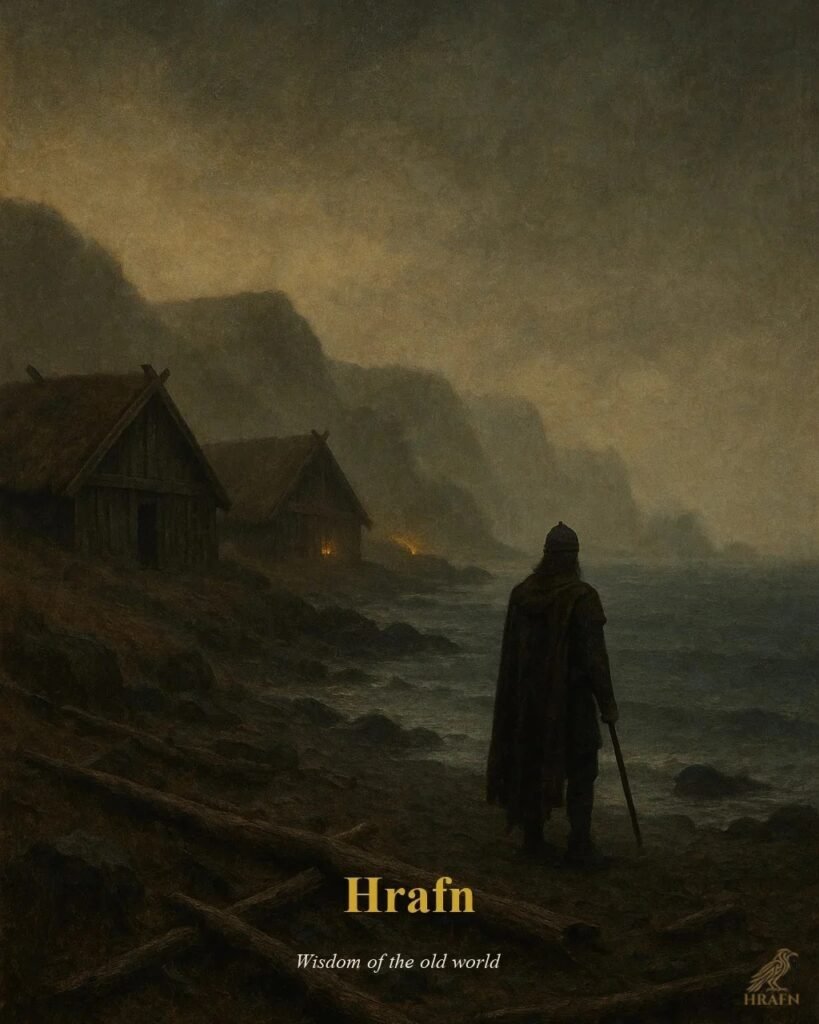
Imagine standing at the edge of the known world. Before you, nothing but ice and sea. Most people would turn back. Leif Eriksson sailed on.
He grew up in Greenland during the 970s, son of Erik the Red. At that time, Greenland was the outermost point known to humankind. Ice marked the border. No one knew the sea beyond it.
What the Old Tales Report
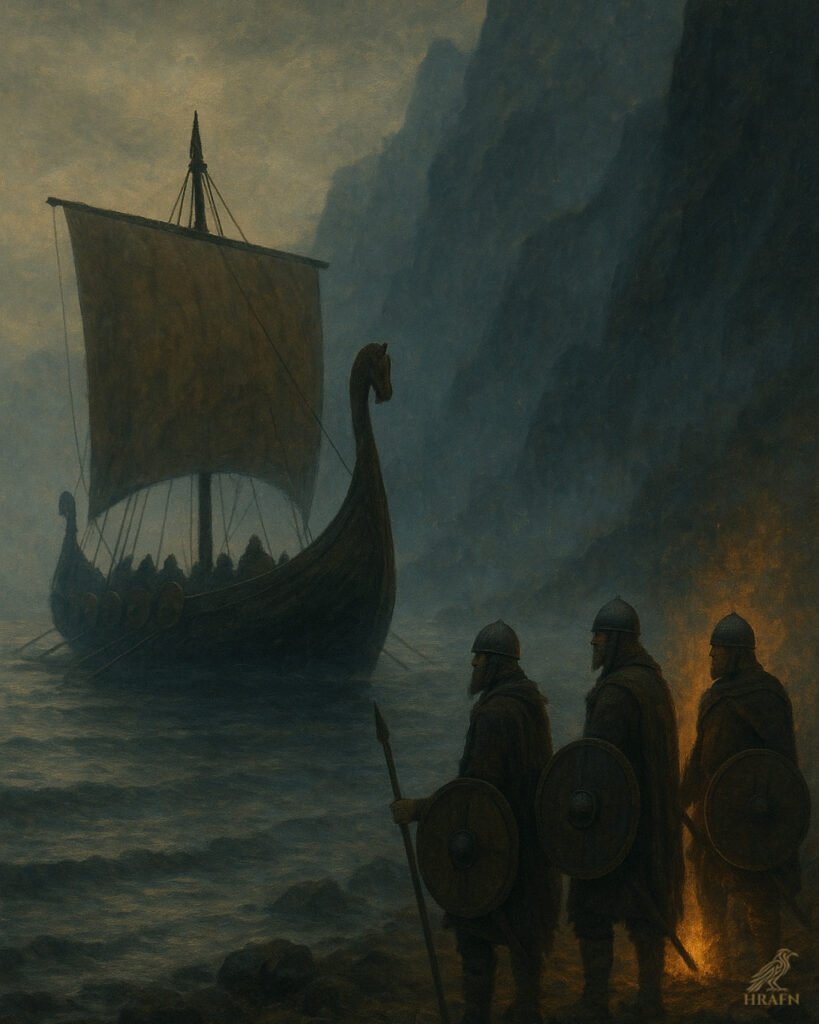
The sagas tell a clear story: Leif sails west. He discovers three lands and names them: Helluland, Markland, Vinland. He returns – with grapes and timber in tow.
But be careful: these stories are old, but their written record is not. They were only put to parchment in the 13th century – two hundred years after the actual voyages. Oral tradition shifts. Even the sagas contradict each other: the Saga of the Greenlanders claims another man saw the land first – Bjarni Herjolfsson. Fame is rarely distributed fairly.
Family and the King’s Mission
Leif was one of several children of Erik the Red and his wife Thjodhild – his siblings were Thorvald, Thorstein, and Freydis. According to the Saga of Erik the Red, Leif spent time at the court of the Norwegian king Olaf Tryggvason, who converted him to Christianity and charged him with bringing the new faith to Greenland. On the way back, the same saga reports, he stumbled upon Vinland by chance. After his return, Leif became leader of the Greenland settlement following his father’s death.
What the Ground Proves
Dig deeper, and you find facts instead of legends. In Newfoundland lies a place called L’Anse aux Meadows. There stand eight buildings of wood, roofed with turf: three houses, a forge, four workshops. It is the only known Viking settlement in all of North America. The earliest proof that Europeans set foot in the New World.
And then science works its own kind of magic. Around the year 992 or 993, a massive solar storm raged. It left a trace in the tree rings – like the sun’s signature carved into wood. Researchers counted the rings afterward: 29 years later, the axe fell that cut this timber. The year is certain: 1021. A single year, pulled from a thousand years of silence.
The Lesson of the Norsemen
They did not stay. No kingdom rose here, nothing lasted. Only a coastline – set foot on, tested, left behind again. And that is exactly where the true glory of these men lies: not in owning land, but in the setting out itself. They sailed to where every map ended. And they returned – not laden with crowns, but with knowledge.
Did Leif himself sleep in these houses at L’Anse aux Meadows? Probably. It’s not proven. Some questions remain open, just like the sea he once crossed. Perhaps that is exactly the message that still holds true today: sometimes what matters is not certainty about the destination – but the courage to set out at all.
Sources
The written foundation for Leif’s biography is the Saga of Erik the Red and the Saga of the Greenlanders, together known as the “Vinland Sagas,” both first written down in the 13th century and contradicting each other on several points. Archaeologically, a Norse presence in North America is confirmed by the excavations at L’Anse aux Meadows and by a 2021 dendrochronological study published in the journal Nature, which used a cosmic radiation event recorded in tree rings to pin down the year 1021 as the date of Norse activity at the site. Which of the settlement’s inhabitants was actually Leif himself cannot be established archaeologically – for that, the saga accounts remain the only source.