Odin at King Geirröd’s Hall
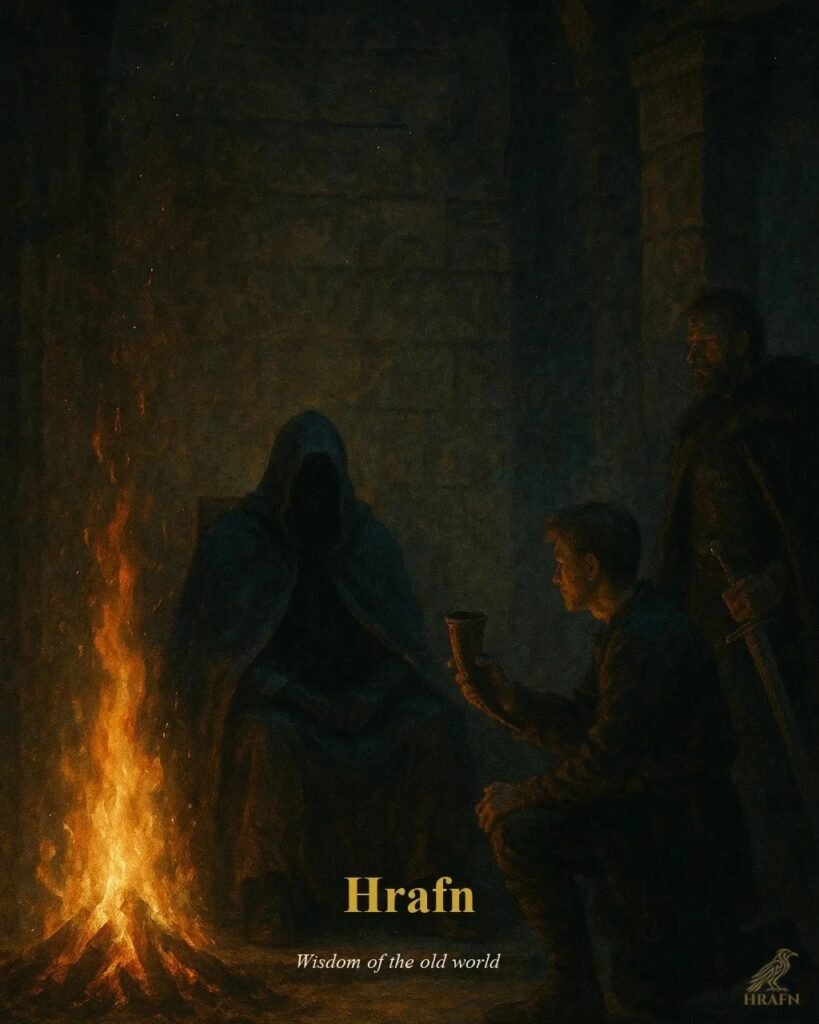
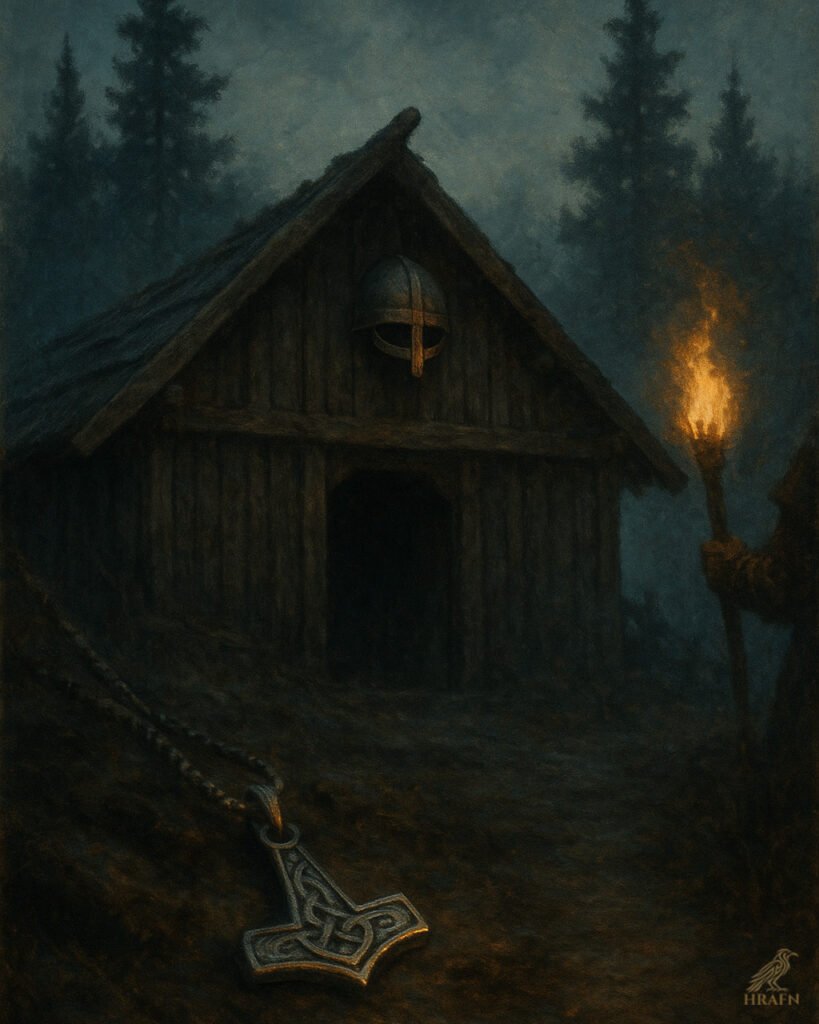
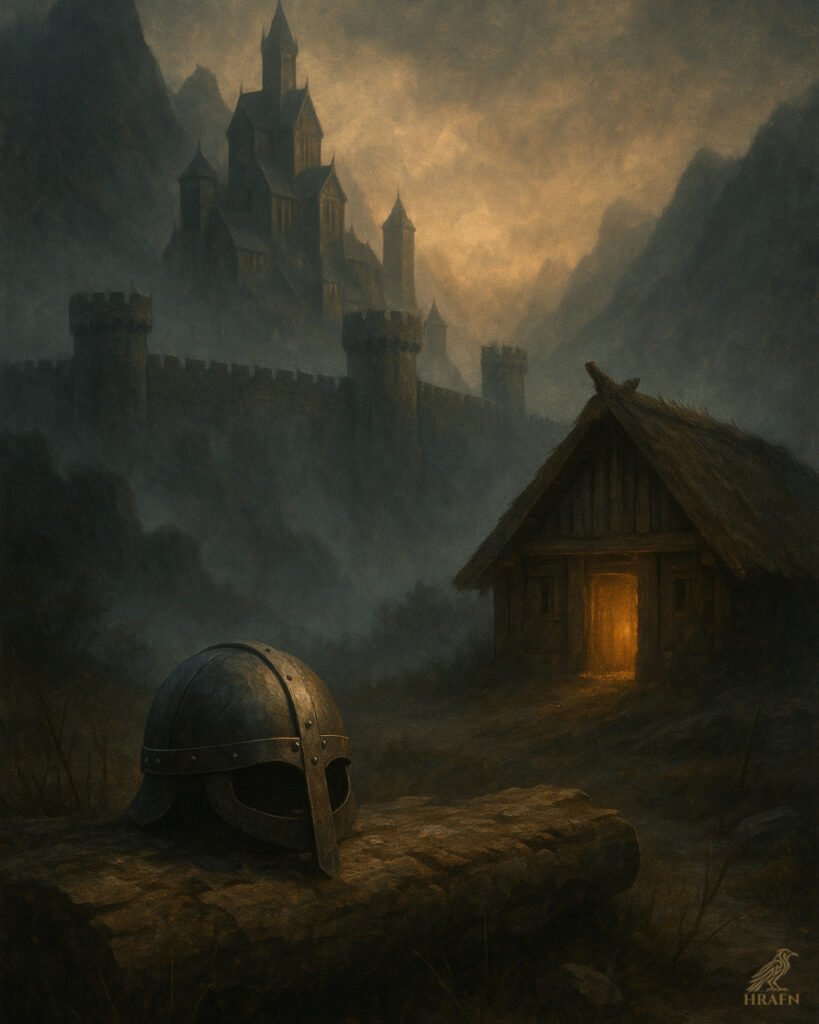
A stranger stands before a hall. Rain lashes his dark blue cloak. The dogs do not bark. They do not attack him. That is strange – and it will cost a king his life.
So begins the Grimnismal, a poem from the Edda. Odin and his wife Frigg once raised two brothers: Geirrod, the elder, was raised by Odin. Agnar, the younger, was raised by Frigg. Geirrod betrayed his brother. He seized the crown for himself. Agnar lost everything.
A Wager Between Gods
Odin and Frigg sit on the high seat, looking down upon the world. They argue about Geirrod. Frigg accuses him: he is stingy. He treats guests poorly. Odin disagrees. The two make a wager.
Frigg acts quickly. She sends her handmaid Fulla to the king’s hall. The message: a man skilled in magic is coming. Will you recognize him? No dog will bark at him.
Eight Nights Between the Flames
The stranger enters. He calls himself Grimnir – “the Masked One.” He says nothing more. King Geirrod does not trust him. He has him seated between two fires. No bread. No water. No word. For eight nights, the fire burns beside him.
Then something unexpected happens. The king’s son – who by chance bears the same name as the betrayed uncle, Agnar – approaches the tormented stranger. He hands him a horn of drink. Grimnir drinks. And he begins to speak.
The Greatest World-Description in Norse Poetry
What follows now defies all bounds. In 54 stanzas, composed in the solemn meter ljodahattr, Grimnir unfolds the entire worldview of the Vikings: the halls of the gods, the roots of the world tree, the wolves, the names of Odin. A young man hands a stranger water – and is given the knowledge of the world in return.
The King’s Fall
By the end of the speech, Geirrod sits on his throne. His sword lies half-drawn in his lap. Now he recognizes the truth: the stranger is Odin himself. The king leaps up. He wants to save the god, not kill him anymore. But he stumbles. He falls onto his own blade.
Odin vanishes, as suddenly as he came. Agnar ascends his father’s throne. He rules long and well.
What Remains of the Story
The text appears in the Codex Regius, a manuscript from the 13th century. Scholars still argue today about what the fire means: a trial that strengthens? Or pure destruction? The scholar Jens Peter Schjodt already raised this question in 1988.
Some read the story today as a lesson on hospitality – as a sacred law no one may break. This interpretation is modern. The myth itself knows no such law. It knows only one truth: whoever torments a wanderer pays, in the end, with his own blood.
Sources
This tale has been passed down mainly through the Poetic Edda and Snorri Sturluson’s Prose Edda. As with all orally transmitted myths, the material was only written down centuries after it originated, so later influences and differing versions cannot be ruled out.