Odin’s Riddle Contest with Vafthrudnir
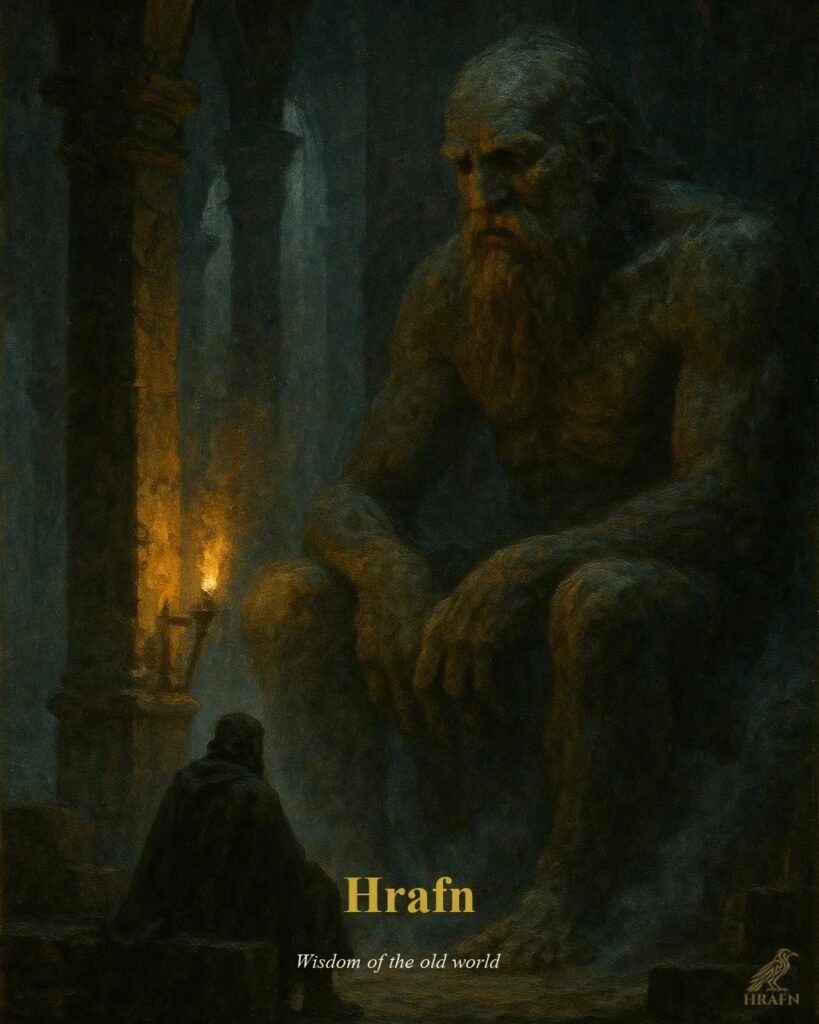
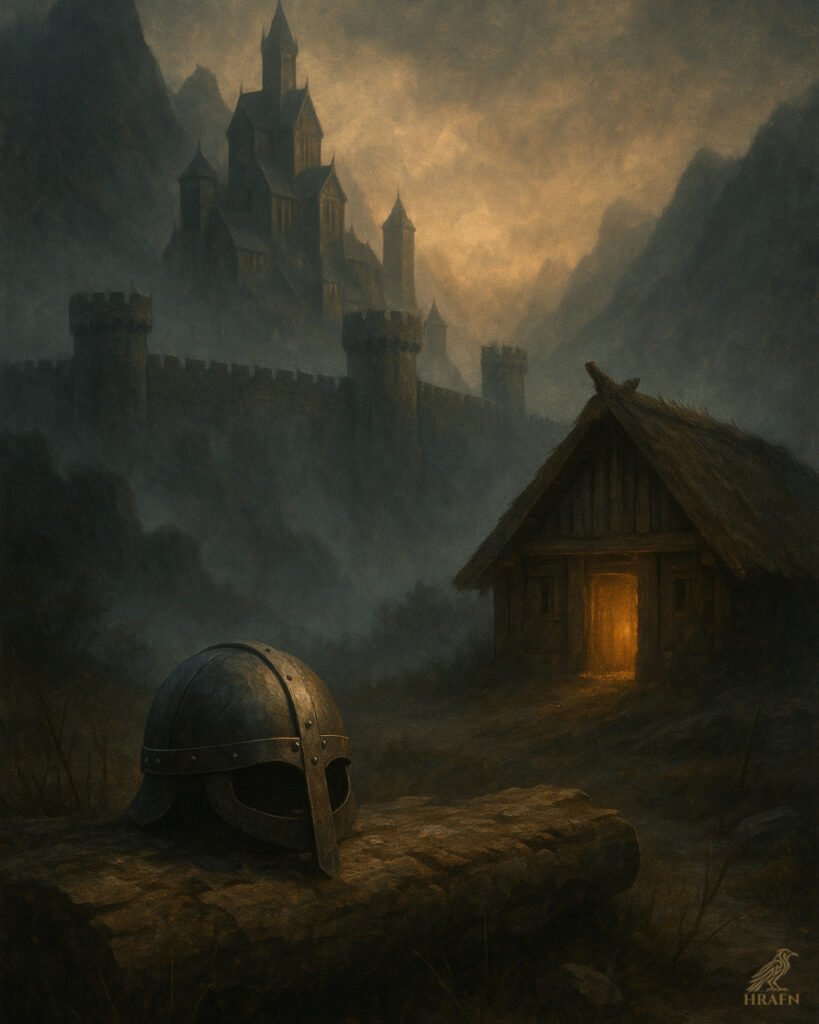
A god leaves his hall. He stakes his life–for knowledge. Frigg warns him even at the door: Vafþrúðnir, she says, is the mightiest being she knows. Odin doesn’t listen. He goes.
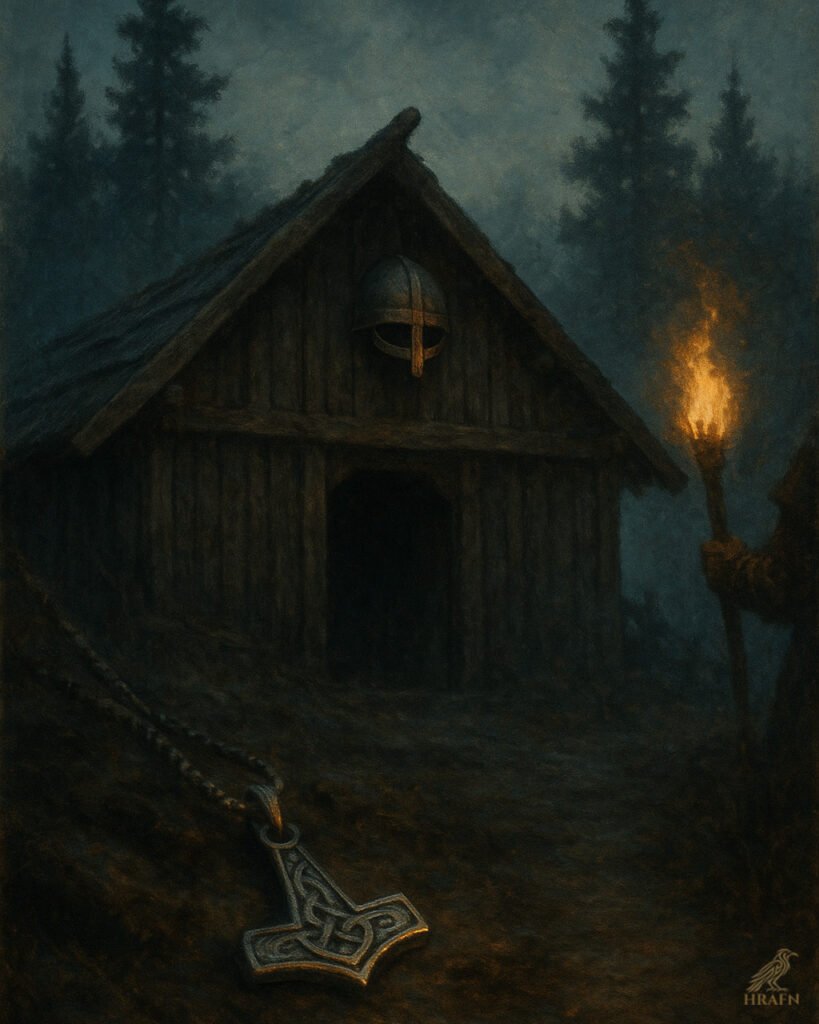
He does not come as a god. He comes as a wanderer, hooded and nameless. “Gagnráðr,” he calls himself, and asks for the old right of hospitality. The giant invites him to his seat. Then the game begins.
The Rule: Only the Wiser One Survives
The rule is harsh and simple: whoever knows less loses his head. In stanza 19, Vafþrúðnir stakes his own. From here on, it is no longer about courtesy. It is about everything.
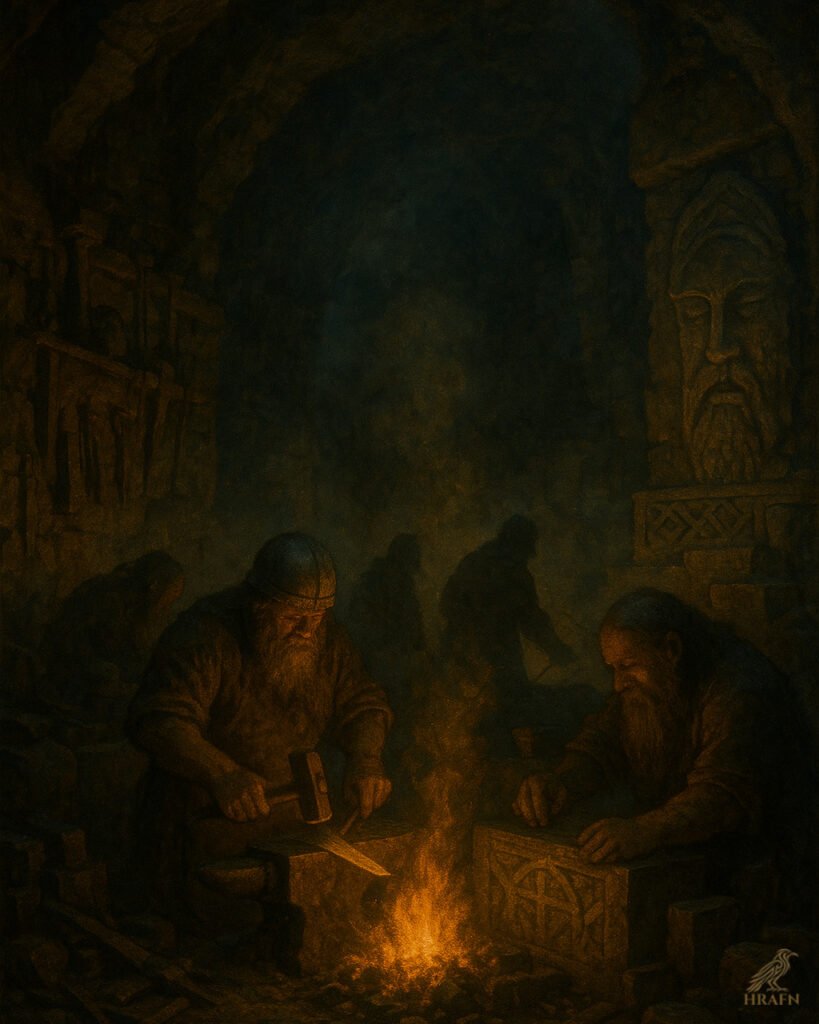
What follows is no battle of swords. It is a mapping of the entire world. Question by question, they feel their way through creation: the earth grows from the flesh of the primordial giant Ymir. The Élivágar, poisonous streams out of the void, give birth to the first life. A line of giant ancestors unfolds–Aurgelmir, Þrúðgelmir, Bergelmir. And they speak of the end: Líf and Lífþrasir, a human pair who survive the Fimbulwinter in the forest of Hoddmímir and repopulate the earth afterward. Víðarr and Váli are mentioned too, the gods who remain when Surt’s fire dies out and the world lies in ashes.
The Question That Decides Everything
Then Odin turns the game around. He asks what he himself whispered into the ear of his dead son Baldr, before the flames consumed him. Only one being knows that answer. In this moment, Vafþrúðnir recognizes who sits before him. He concedes defeat. What was whispered remains forever unspoken–an answer no one but Odin will ever possess.
Where We Know the Story From
The contest survives in the poem Vafþrúðnismál: 55 stanzas in ljóðaháttr, an old Norse meter with its own sound and rhythm. The poem likely dates to the 10th century. It has been preserved in the Codex Regius, an Icelandic manuscript written around the mid-13th century.
In the end, one thought remains that still holds true today: wisdom belongs to no one simply by right. It is not a possession to be hoarded. It is a stake. Whoever truly wants it must risk something–if need be, their own head.
Sources
This tale has been passed down mainly through the Poetic Edda and Snorri Sturluson’s Prose Edda. As with all orally transmitted myths, the material was only written down centuries after it originated, so later influences and differing versions cannot be ruled out.