The Mead of Poetry
Imagine taking a single sip – and suddenly finding an answer to every question. That is exactly what the mead of poetry promised. But the price was steep. This story begins in peace and ends in blood.
After a long war, the Aesir and the Vanir made peace. Both sides spat into a vessel as a sign of their alliance. From this spittle, the gods shaped a man: Kvasir. He was so wise that no one ever asked him anything without receiving an answer.
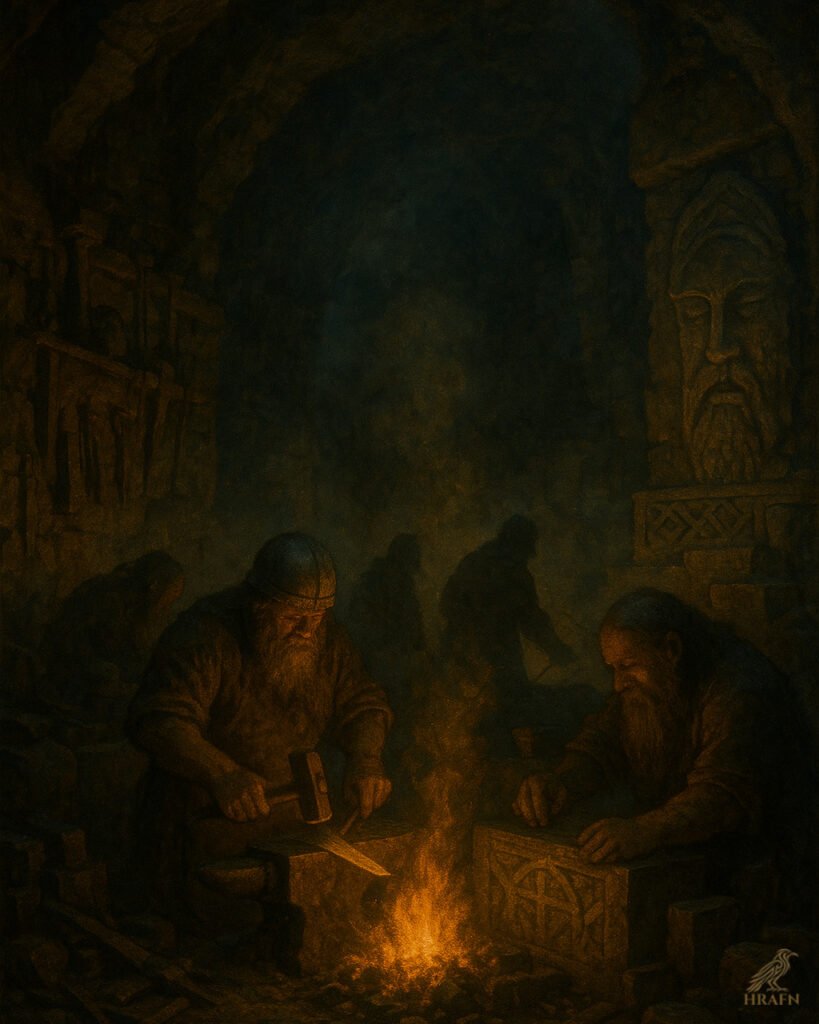
Two dwarves named Fjalar and Galar invited Kvasir to visit them. Then they killed him. They caught his blood – in two vats named Son and Bodn, and in a cauldron named Odrerir. Mixed with honey, it became a drink. Whoever drank it became a skald or a scholar. So Snorri tells it in his work Skaldskaparmal.
Odin Steals the Mead
The drink changed hands. The giant Suttung got hold of it and hid it deep inside the mountain Hnitbjorg. His daughter Gunnlod was set to guard it.
Odin wanted this mead – at any cost. He called himself Bolverk, meaning “evildoer,” and hired himself out as a farmhand. For an entire summer, he did the work of nine men. His wage: a single sip of the mead.
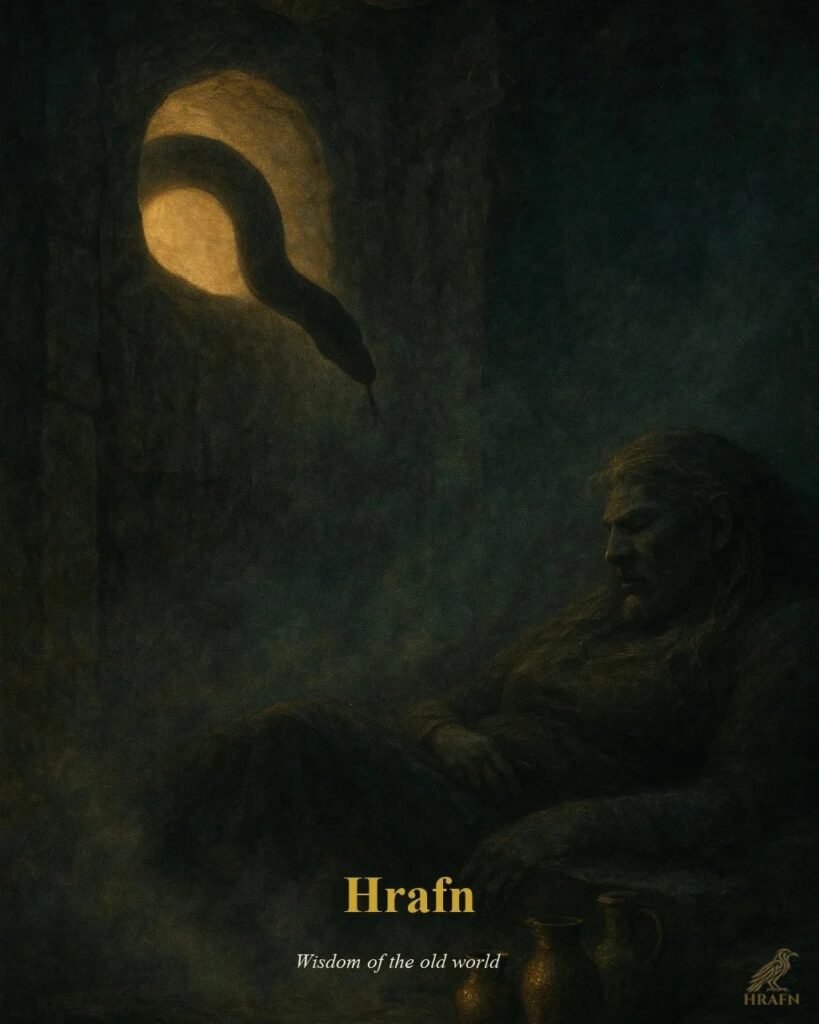
But that was not enough for him. Odin bored a hole into the rock, transformed into a snake, and slithered through. He spent three nights with Gunnlod. Then, in three enormous gulps, he drained all three vessels dry.
He flew off as an eagle. Suttung, also as an eagle, chased him all the way to Asgard. There Odin spat out the mead – the gods caught it. But not all of it landed in the right vessels. What escaped him backward fell to the earth. That, it is said, is the portion for bad poets.
An Older, Darker Version
The oldest source comes from Odin himself – at least in the poetry. In stanzas 104 to 110 of the Havamal, the god tells his own story. Linguists date the core of these verses to the pagan 10th century.
Here, the shine of victory is missing. Odin broke a ring-oath he had sworn to Gunnlod. And she was left behind – weeping, betrayed, alone in the mountain.
Archaeological traces exist too: the picture stone Stora Hammars III on Gotland may show exactly this scene – the eagle-Odin with the stolen mead. This is not certain. But the interpretation is compelling.
Long before Snorri, “Kvasir’s blood” was already a fixed expression for poetry. So the story lived on, in songs and images, centuries before anyone wrote it down.
What Remains
No source states it directly, but the story itself speaks loudly enough: inspiration is not a gift. You must earn it. You must trick your way to it. Sometimes you must suffer for it – and in the end, you always pay. Even today, when a poem comes together or a sentence suddenly falls into place, a piece of that old price is embedded in it.
Sources
This tale has been passed down mainly through the Poetic Edda and Snorri Sturluson’s Prose Edda. As with all orally transmitted myths, the material was only written down centuries after it originated, so later influences and differing versions cannot be ruled out.