Thor at Utgard-Loki
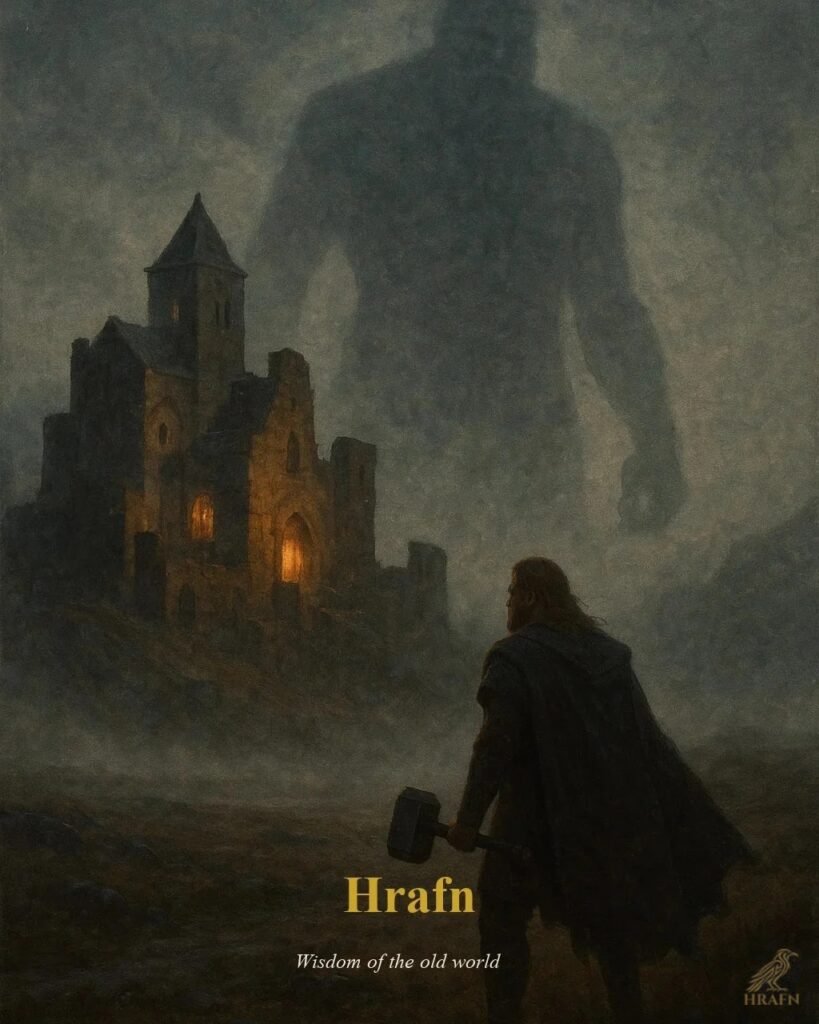
Picture the strongest god of all time striking three times – and hitting nothing. So begins the only story in which Thor does not win. A giant outwits him. With a plan, with patience, with pure cunning.
We know this story from almost a single source: chapter 44 of the Gylfaginning. Snorri Sturluson wrote it down around 1220. Even his narrator, called “Third,” tells it only reluctantly. As if his own god’s defeat made him uncomfortable.
Three Strikes, Three Valleys
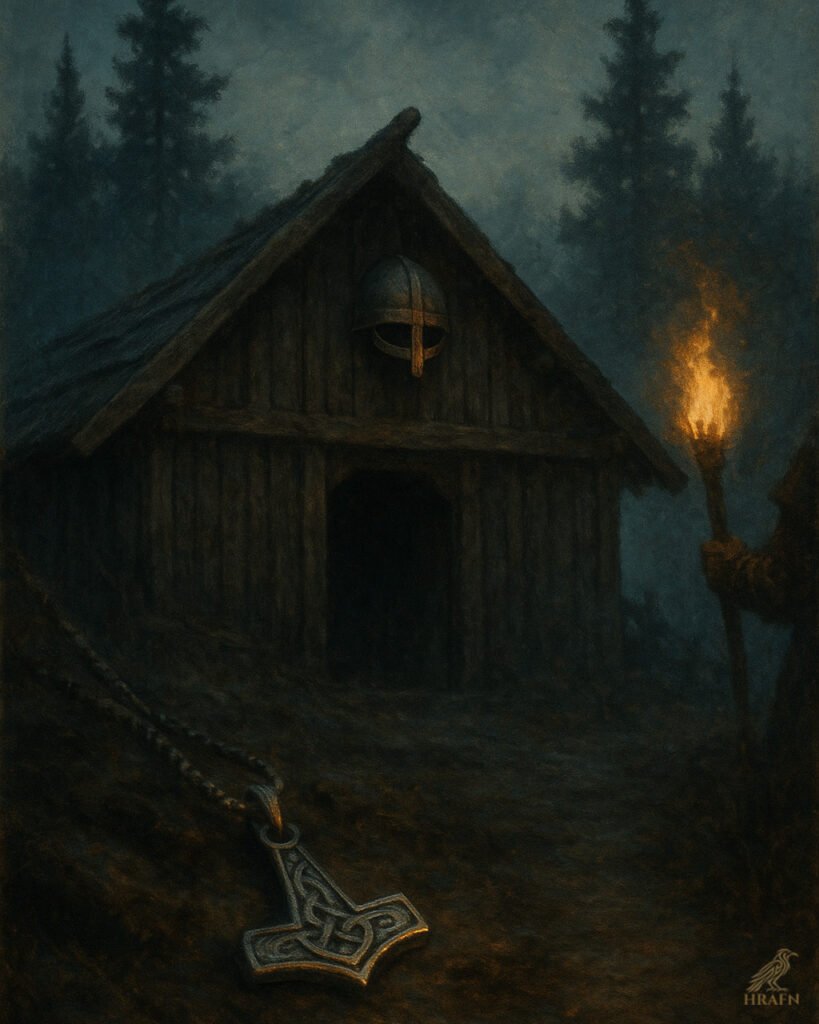
Thor travels east. Loki, Thjalfi, and Roskva travel with him. Along the way, a giant joins them: Skrymir. At night, Thor swings his hammer three times. Three times it is meant to strike him. But magic deflects every blow. Later we learn: any single one of those strikes would have killed a man. What actually happens? Three deep valleys are torn into the earth. Skrymir remains unharmed.
The Castle of Deception
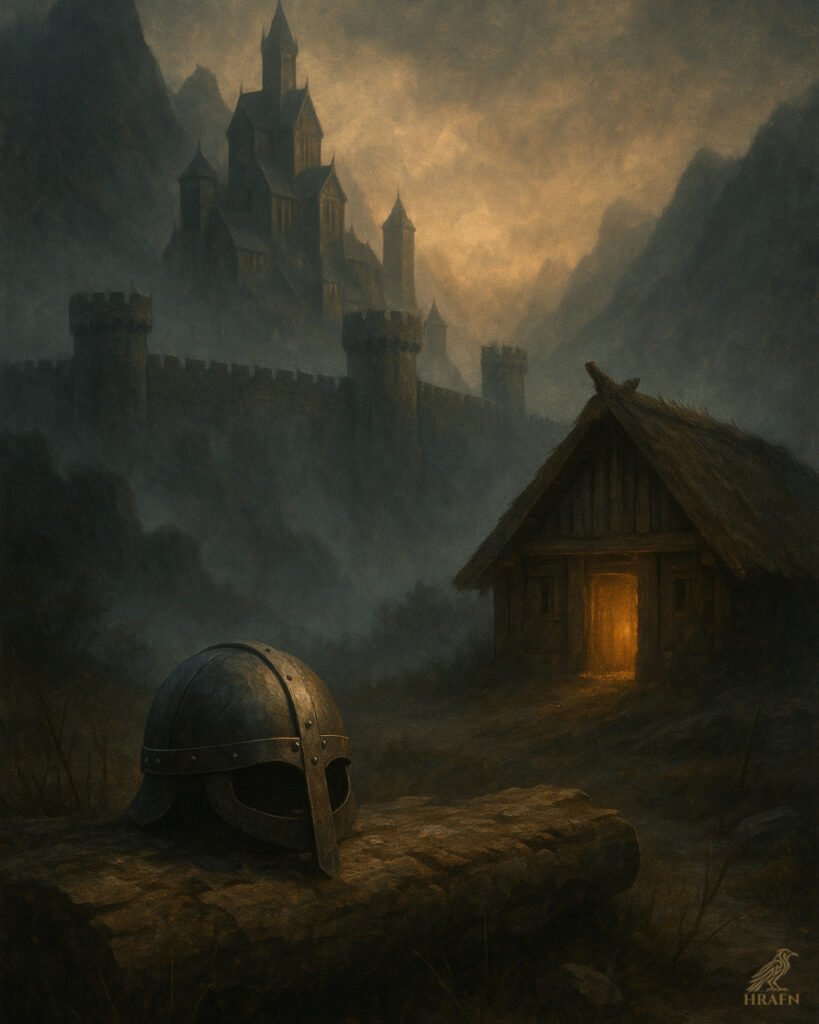
The journey ends before the gates of Utgard. Behind its walls, trials await – and every single one is a fraud. The Norsemen called this sjonhverfingar: deception of the eyes.
Loki competes against Logi in an eating contest. He loses – because Logi is wildfire itself. Thjalfi races against Hugi. He loses – because Hugi is thought itself. Faster than any runner.
Then Thor. He is to drink from a horn supposedly easy to empty. He drinks and drinks. The horn stays full. In truth, it reaches all the way down to the sea – his gulps create the world’s tides.
He is to lift a gray cat off the ground. A trifle, he thinks. But the cat is Jormungandr, the World Serpent, coiled around the entire earth. Thor manages to lift a single paw off the ground. Nothing more – but enough to make everyone in the hall shudder.
Finally, he is to wrestle an old woman, Elli. She brings him to his knees. Elli is old age itself. No one escapes her, not even a god.
When the Truth Falls
In the morning, Thor learns the truth. Rage seizes him. He grabs his hammer, wants revenge. But the giant is gone. The castle is gone. Before him lies only wide, empty land.
What does this story mean today? Perhaps this: Thor’s supposed failure was spoken of almost entirely by the mouth of his host – the giant who deceived him. What looked like defeat was, in truth, greatness. Thor simply wasn’t allowed to see it in that moment.
To this day, it remains unresolved whether Utgard-Loki and Loki are the same figure – two names for one and the same cunning power. What is certain: the myth is older than Snorri’s account. Already the Lokasenna, a poem from the 10th century, mocks Thor for this very story – for the glove he carried with him that night.
Sometimes you only recognize strength once you understand how thoroughly you were deceived.
Sources
This tale has been passed down mainly through the Poetic Edda and Snorri Sturluson’s Prose Edda. As with all orally transmitted myths, the material was only written down centuries after it originated, so later influences and differing versions cannot be ruled out.