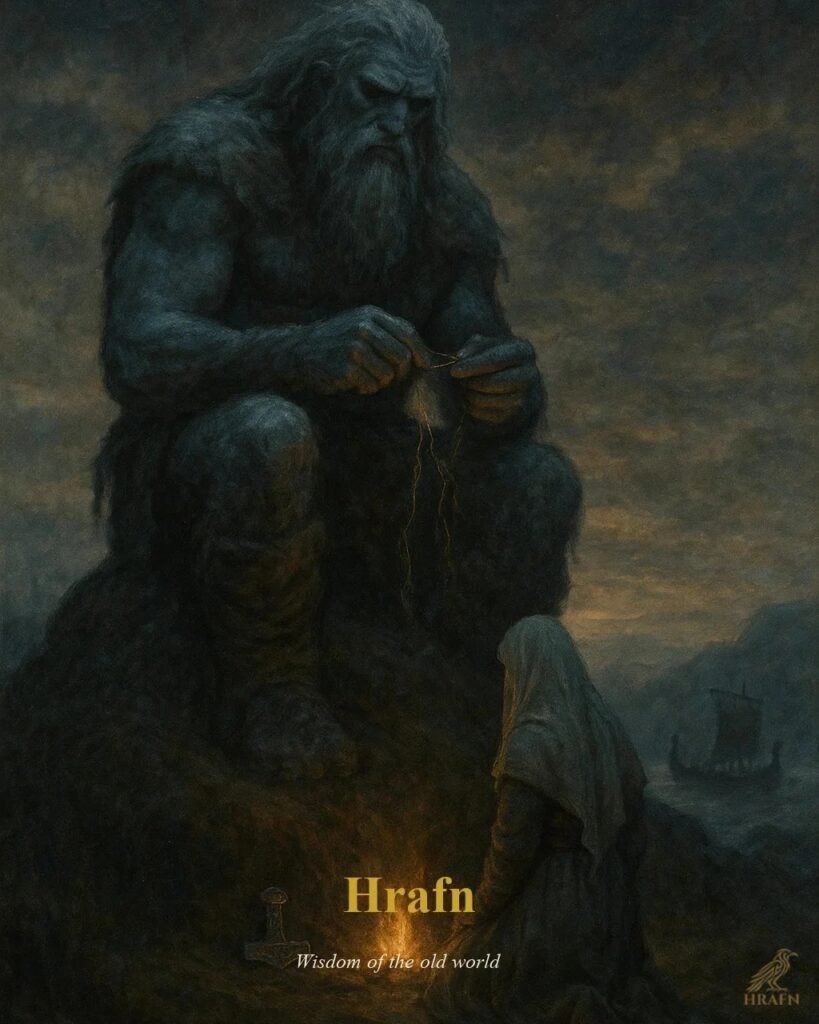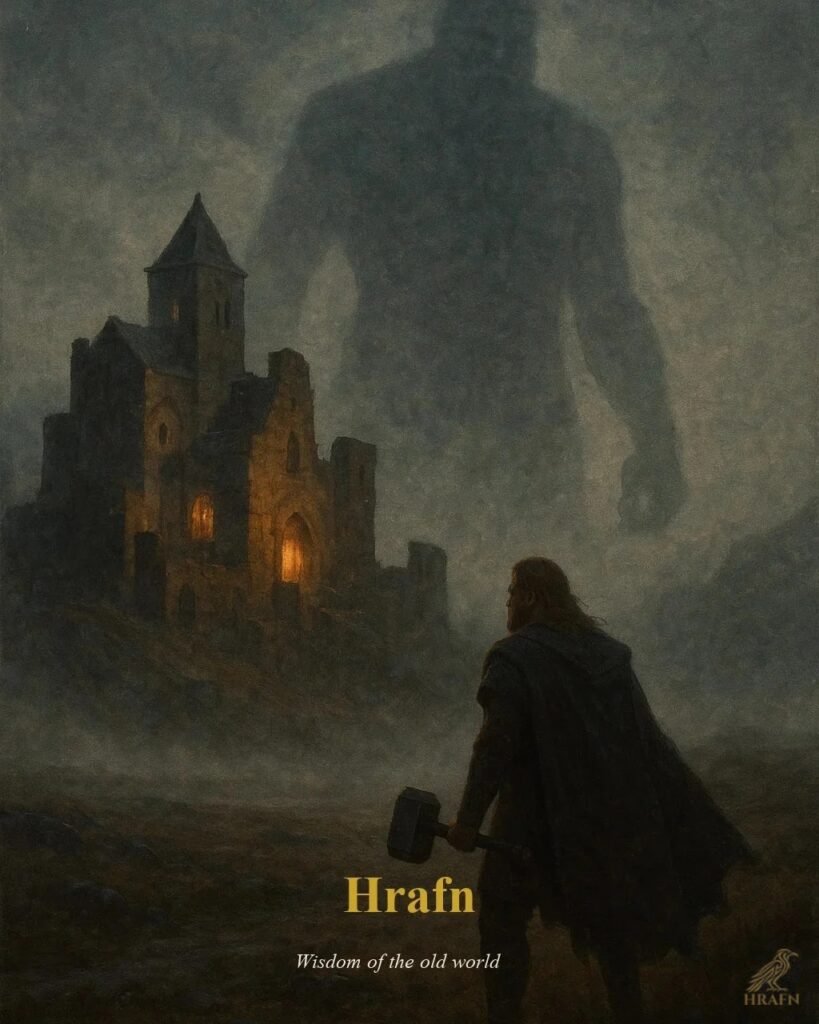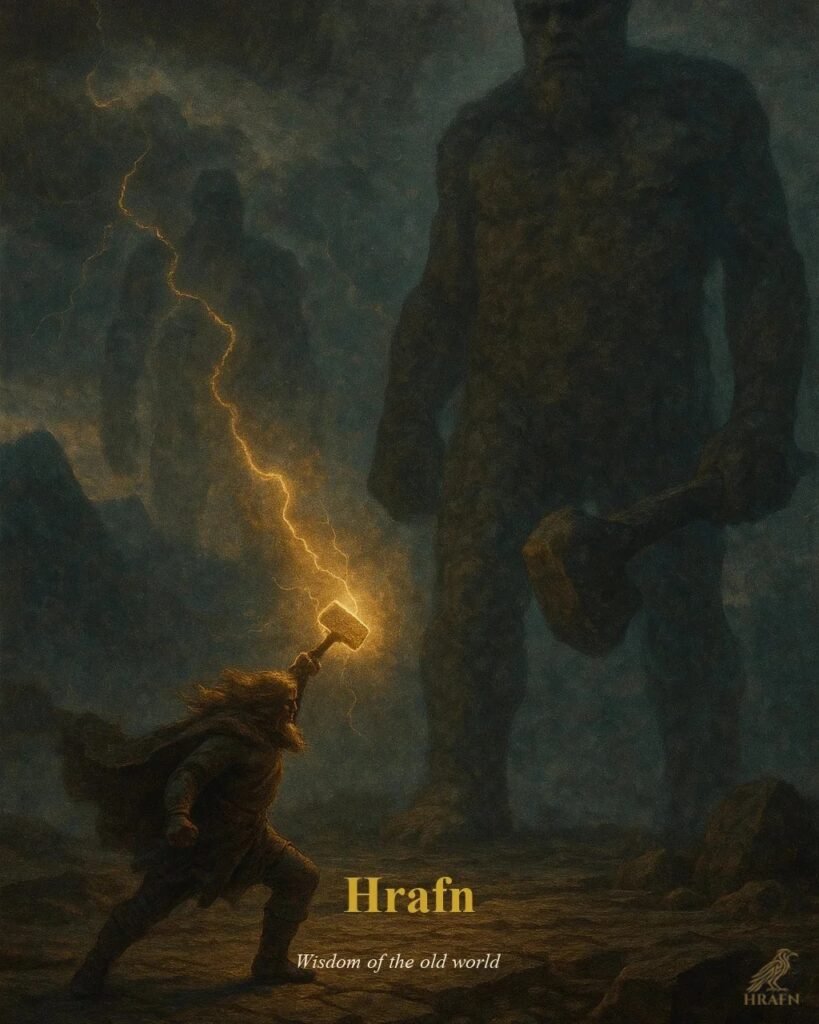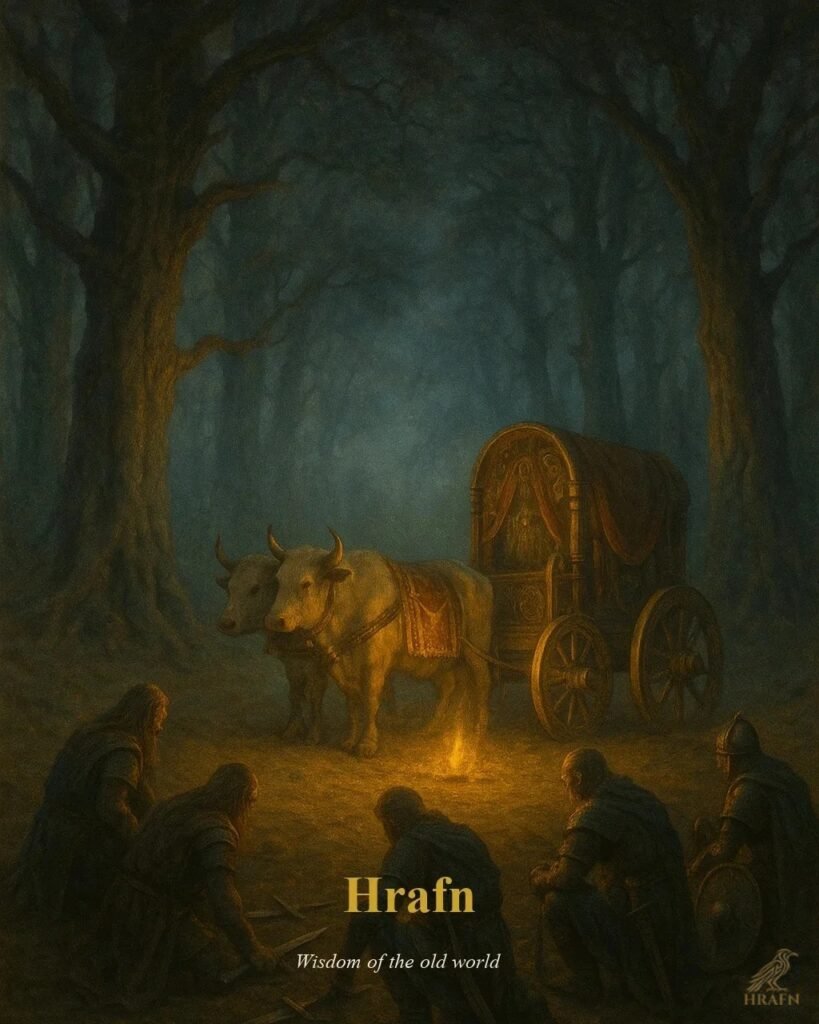
A hammer flies through the air, crushes a giant’s skull – and returns straight back to its master’s hand. This is how Thor fights, son of Odin, mightiest among the Aesir.
His hammer is called Mjolnir. It hits every target. No throw ever misses, no weapon can withstand it. Thor hurls it at his enemies, and Mjolnir always comes flying back into his grip.
Thor watches over two worlds: Asgard, home of the gods, and Midgard, the world of men. When he mounts his chariot, two goats pull him across the sky. The wheels roll, thunder rumbles, and far below, the mountains tremble.
Again and again, Thor goes to battle. Giants threaten the order of the world – and Thor stands against them. He protects what must be protected. That is his duty, his nature, his path.
Family
Thor is the son of Odin and the earth goddess Jord – the strength of the earth itself runs through him. His wife is Sif, famed for her golden hair. Together they have a daughter, Thrud. With the giantess Jarnsaxa he also fathers Magni, the strongest of the young gods. Both sons, Magni and Modi, survive Ragnarok and inherit Mjolnir in the end. Ullr, Sif’s son from an earlier union, also grows up in Thor’s household – as his stepson.
How Mjolnir Was Made
Mjolnir wasn’t always perfect. It all begins with a prank: Loki secretly cuts off Sif’s golden hair. Thor rages with fury. To save his own skin, Loki promises the dwarves Sindri and Brokkr new treasures, even finer than before – and wagers his own head on it.
Sindri forges at the anvil while Brokkr works the bellows. Loki, transformed into a fly, stings Brokkr again and again to sabotage the work. On the third sting he hits him on the eyelid – Brokkr pauses just long enough to wipe away the blood. In that exact moment, Mjolnir’s one flaw is born: a handle too short. Even so, the gods declare the hammer the finest of all the gifts. Snorri tells the whole story in the Skáldskaparmál.
Disguised as a Bride
One day, Mjolnir vanishes without a trace. The giant Thrym has stolen it and demands an outrageous price: Freyja as his bride. The gods confer – and Heimdall has the saving, if humiliating, idea. Thor himself must dress as Freyja and travel to the wedding.
With veil, bridal gown, and Loki posing as his handmaid, Thor enters the hall of the giants. At the feast, the supposed bride single-handedly devours an entire ox and eight salmon – Loki explains it away as days of hunger from sheer anticipation of the wedding. When Thrym finally lays Mjolnir on the bride’s lap to bless the marriage, Thor waits no longer. He seizes the hammer and strikes down the giant and his entire kin. The story is told in the poem Þrymskviða of the Poetic Edda.
Fishing for the World Serpent
As a guest of the giant Hymir, Thor wants more than just fish. He tears the head off one of Hymir’s oxen to use as bait and rows far out to sea – farther than Hymir ever dared. The bait works: Jormungandr, the World Serpent, takes it.
Thor braces with all his strength against the line, his feet punching through the bottom of the boat. The serpent surfaces, venom dripping from its jaws. Thor reaches for his hammer – but at the last moment, the terrified Hymir cuts the line. Jormungandr sinks back into the depths. Had Hymir not intervened, the battle against the World Serpent might have been decided right there, long before Ragnarok. Snorri tells this fishing trip in the Gylfaginning; the poem Hymiskviða of the Poetic Edda devotes an entire song to the tale.
The Final Battle
But even the strongest god cannot escape his fate. At Ragnarok, the downfall of the world, Thor’s greatest enemy awaits him: the World Serpent Jormungandr. Both will face each other. Both will die in battle.
Thor knows his end and fights anyway. That is the lesson that stays with us to this day: some battles are worth fighting, even when victory brings no salvation – only the duty to stand for what matters.
In the game: how God of War portrays this figure — and where it departs from the sources — is covered in our mythology check.
Sources
This article draws mainly on the Poetic Edda (including the poems Þrymskviða and Hymiskviða) and the Prose Edda of the Icelandic scholar Snorri Sturluson (13th century), especially its Gylfaginning and Skáldskaparmál sections. The making of Mjolnir and the wager with the dwarves go back to the Skáldskaparmál, the theft of the hammer and Thor’s disguise as a bride to the Þrymskviða, and the fishing trip for the World Serpent to both the Gylfaginning and the Hymiskviða. This is supplemented by further Old Norse sagas as well as archaeological and runic evidence, such as Mjolnir amulets found across much of Scandinavia. Since this material was only written down centuries after Scandinavia’s Christianization, contradictions and later influences in the sources cannot be ruled out.