The Theft of Thor’s Hammer
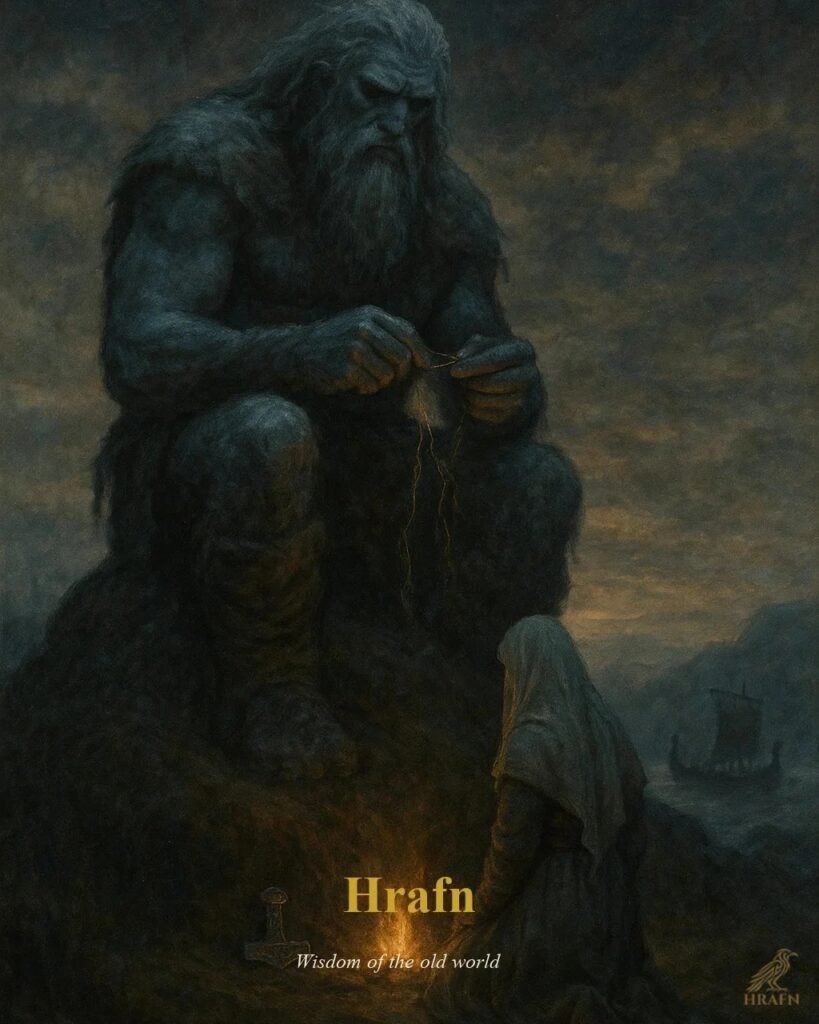
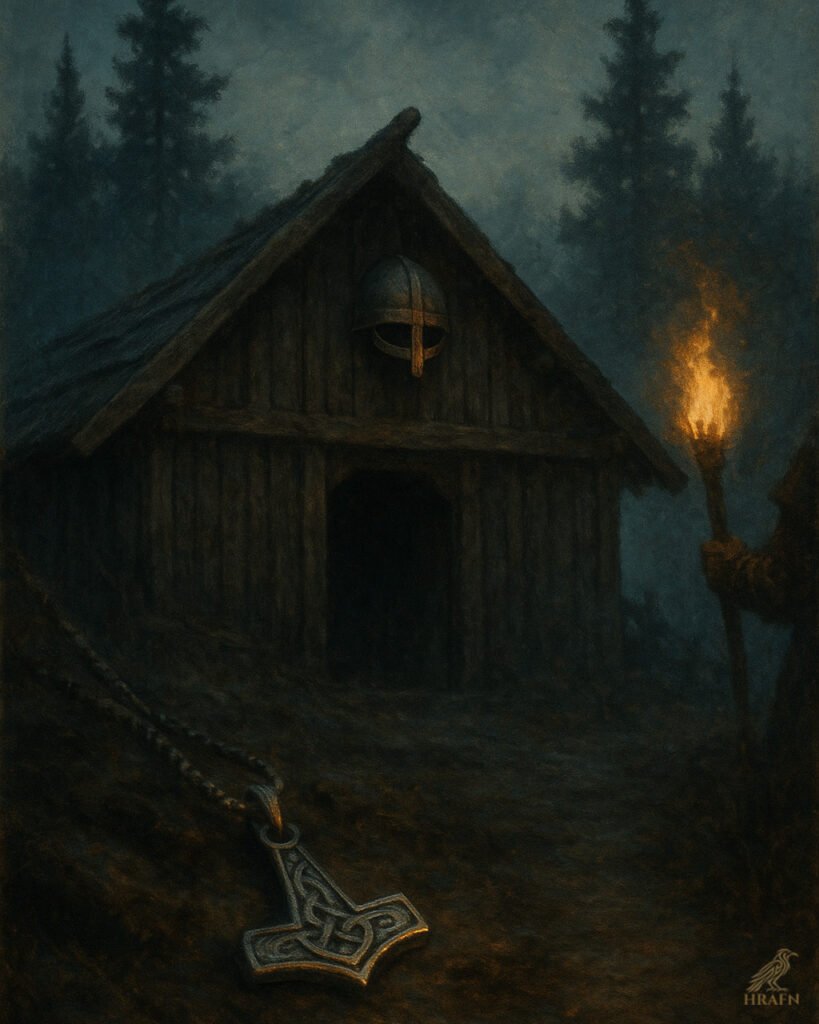
A morning without thunder. Thor wakes up. He reaches for his hammer. Nothing. Mjolnir is gone. So begins one of the most famous poems of Norse mythology: the Thrymskvida.
We know it from only a single source: the Codex Regius, an Icelandic manuscript from the late 13th century. No one knows exactly how old the story itself is. Some scholars date it back to the 9th century, others place it as late as the 13th. And to this day, they argue: does the poem tell genuine pagan belief – or mock it from a Christian point of view?
Loki Takes Flight
Thor needs help. He turns to Loki, the trickster among the gods. Loki slips into Freyja’s feather cloak and flies to Jotunheim, the land of the giants. There sits the giant Thrym on a burial mound, braiding gold for his dogs – as if nothing had happened.
But something has happened. Thrym confesses: he has hidden the hammer eight leagues deep in the earth. A league was once a measure of distance, roughly an hour’s walk. So the hammer lies deep, very deep. Thrym will only return it for one price: Freyja must become his bride.
When Loki delivers this demand, the hall of the gods shakes. Freyja’s fury is so immense that her necklace, the Brisingamen, shatters.
Thor in a Bridal Veil
Now Heimdall steps in, the guardian of the gods, known for his sharp sight. His proposal is bold: Thor himself should play the bride.
Thor resists. He fears the other gods’ mockery – they’ll call him womanish. But in the end he gives in. They drape the Brisingamen around him, hang keys from his belt, dress him in a knee-length gown. Loki accompanies him as a handmaid.
In the giants’ hall, the next test awaits. The veiled “bride” devours an entire ox. Thrym is astonished. Loki has an explanation ready at once: the bride has fasted for days, so great was her longing.
The Hammer Returns
Then comes the decisive moment. Thrym orders the hammer laid in the bride’s lap to bless the union – part of the wedding ritual. The instant Thor’s hand touches Mjolnir, his heart leaps with joy. He seizes the hammer and strikes. Thrym falls. His whole clan falls with him.
Deception was the weapon. The hammer was the prize.
A Hammer That Still Echoes Today
The story lived on. In the 15th century, the Icelandic Thrymlur retold it in verse. Even in the 19th century, people still sang ballads about Thor’s lost hammer.
The hammer itself remained visible too – not as myth, but as jewelry. Archaeologists have found over a thousand Mjolnir pendants from the Viking Age. One of them, from Kobelev in Denmark, bears a carved runic inscription: “This is a hammer.” A simple sentence. But it shows that people didn’t just carry this protection as a private belief – they openly declared it.
Comics and films today often portray Thor differently – muscular, gleaming, without a bridal veil. Those are modern interpretations. But the old story remains what it always was: a tale about loss, cunning, and the strength that returns once you’re willing to make a fool of yourself.
Sources
This tale has been passed down mainly through the Poetic Edda and Snorri Sturluson’s Prose Edda. As with all orally transmitted myths, the material was only written down centuries after it originated, so later influences and differing versions cannot be ruled out.