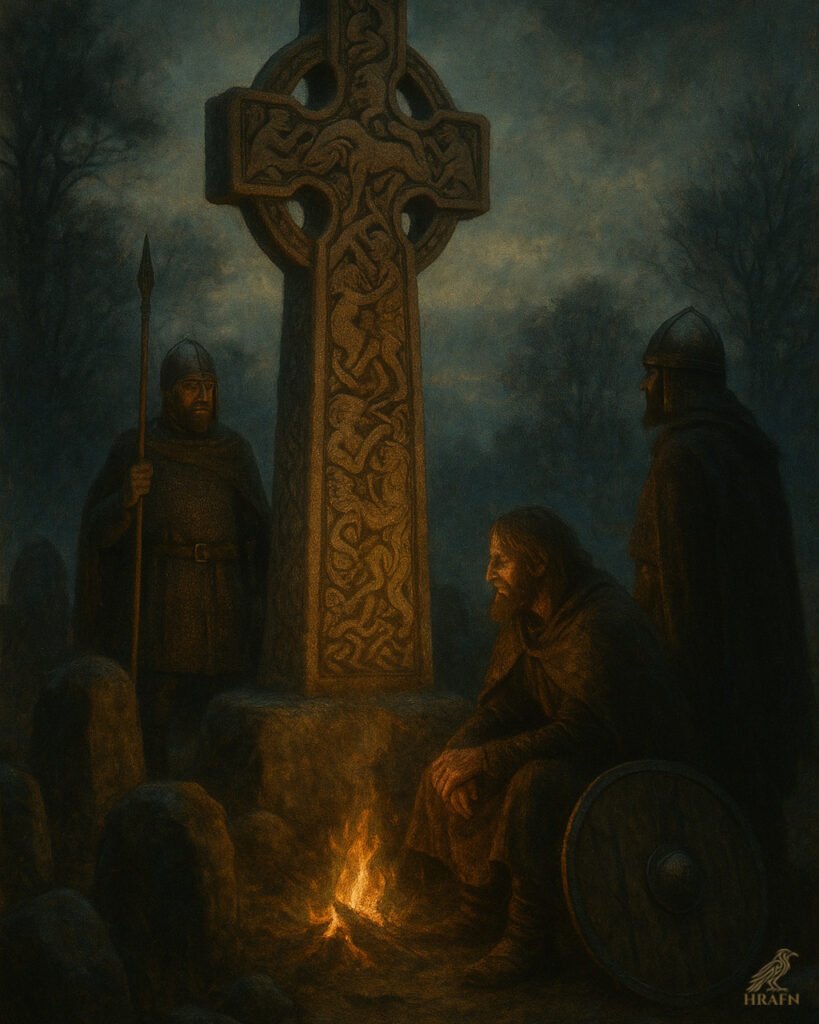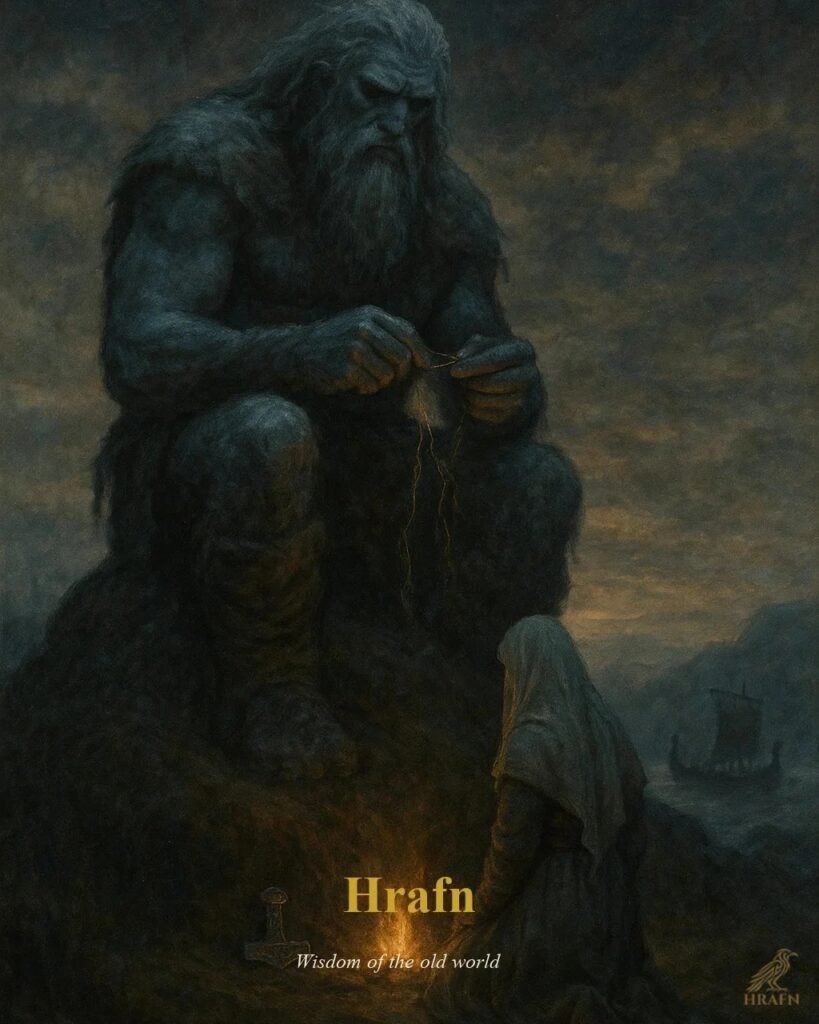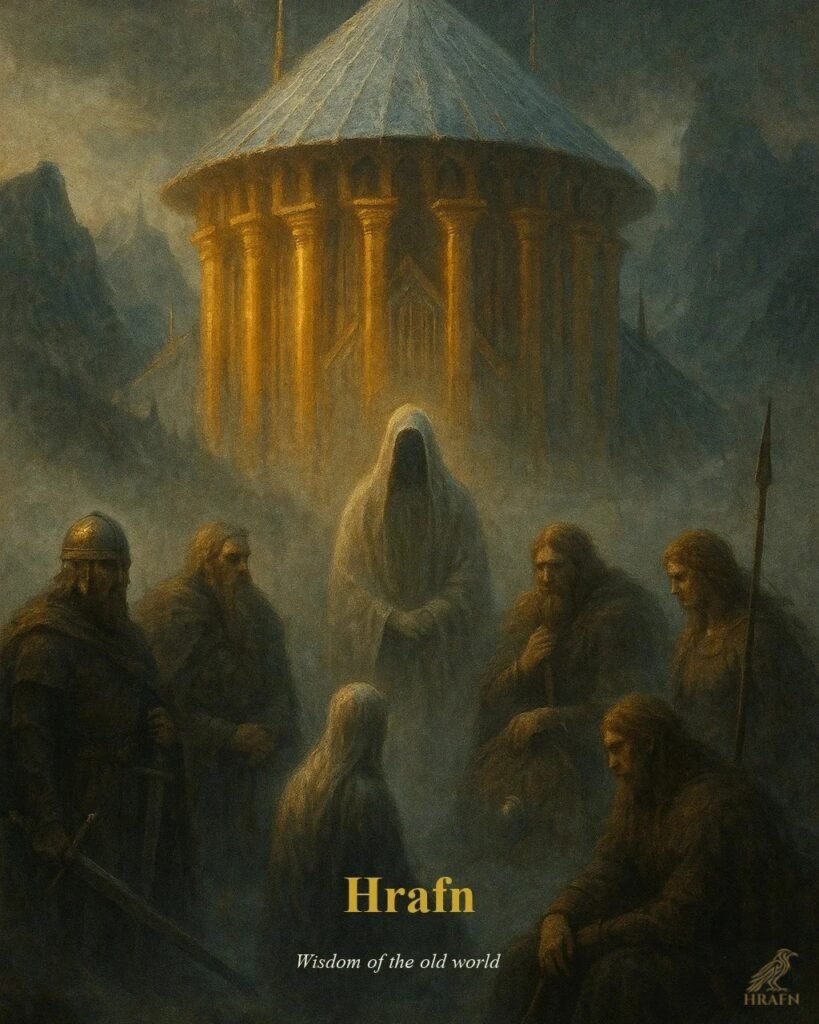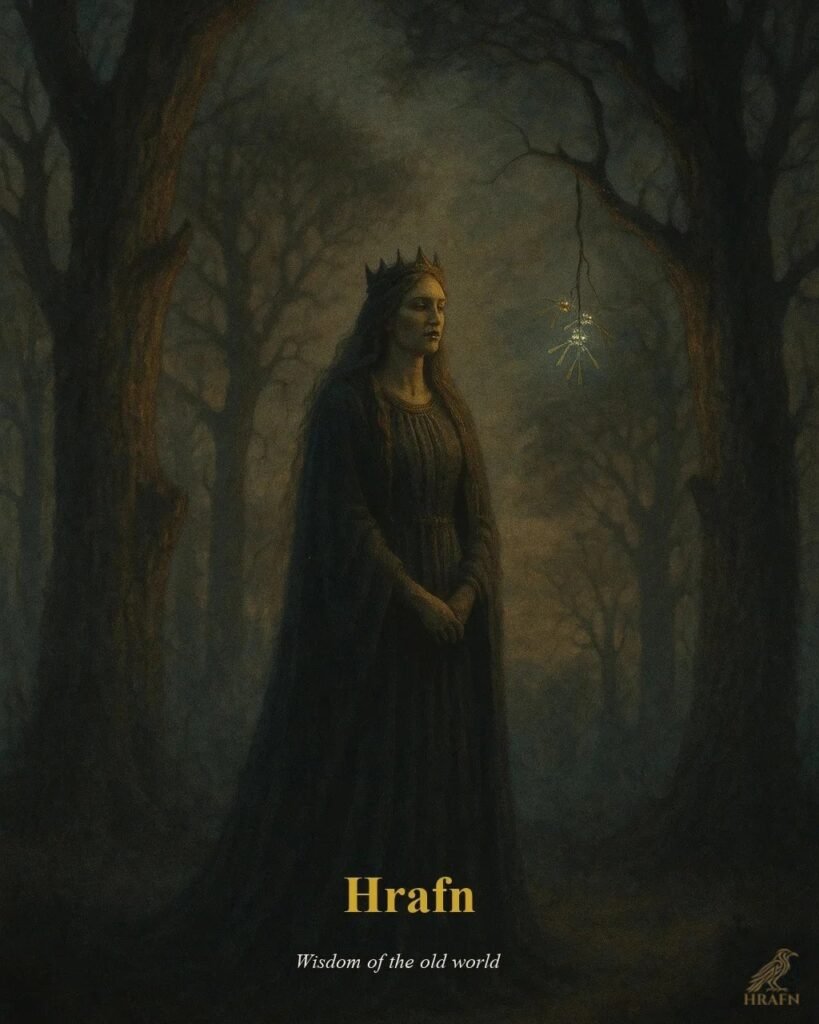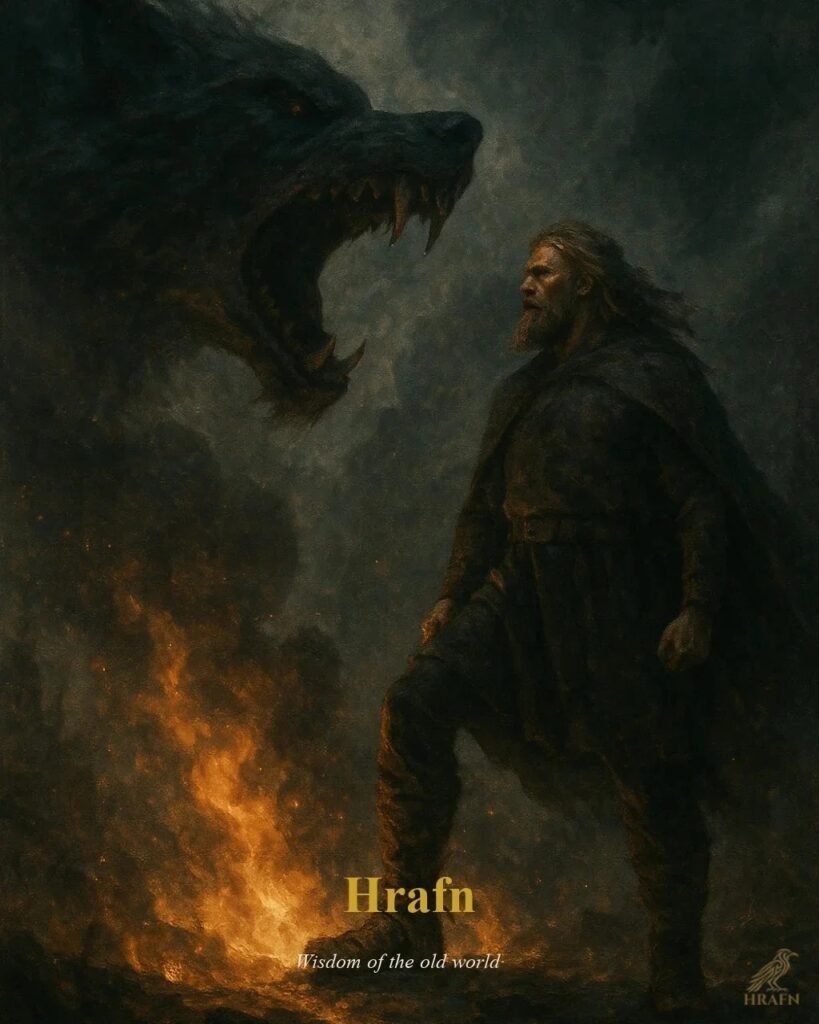
Picture a guardian who never closes his eyes. Who hears every blade of grass grow, who senses every step across nine worlds. This is Heimdall.
He stands at Bifrost, the rainbow bridge. It leads to Asgard, the fortress of the gods. No one passes without Heimdall knowing. His senses surpass anything human. He needs almost no rest. For him, night holds no darkness.
He always carries his horn: Gjallarhorn. A single blast into it, and all the worlds hear the sound. This tone means only one thing: Ragnarok begins. The downfall of the gods. Heimdall will sound it the moment danger draws near.
Family – The Child of Nine Mothers
Heimdall’s origin is extraordinary, even among gods: tradition holds that he was born of nine sisters, daughters of the sea-giant Aegir – the personified waves of the ocean. Nourished by the strength of the earth, the cold of the sea, and the blood of a sacrificed boar, he came into the world as a guardian. His teeth are said to have been made of gold, earning him the name Gullintanni, “gold-tooth,” and he rode a horse named Gulltoppr. His hearing surpassed that of any other being: it is said he could hear grass growing on the earth and wool growing on a sheep’s back. (Source: Poetic Edda, Völuspá hin skamma; Snorri Sturluson, Prose Edda, Gylfaginning)
Rig and the Three Classes of Humankind
Some old stories tell even more about him. They make him the father of humankind. As a wanderer under the name Rig, he is said to have once walked the earth. He stopped at three households and stayed three nights at each, and nine months after each visit a son was born. From the poorest couple came Thrall, forefather of the servants; from the farming couple came Karl, forefather of the free farmers; and from the wealthiest couple came Jarl, forefather of the nobility, whom Rig later personally initiated into warfare and the knowledge of runes. In this way, Heimdall founded the three classes of people and became the origin of human order. (Source: Poetic Edda, Rígsþula)
The Struggle Over the Brísingamen
Another story, known chiefly from the old skaldic poem Húsdrápa, tells of a battle between Heimdall and Loki over the Brísingamen, the precious necklace of the goddess Freyja. Loki had stolen the piece, and Heimdall pursued him. Both transformed into seals and wrestled on a rock in the sea until Heimdall triumphed and returned the necklace to Freyja. This episode is considered early evidence of the deep enmity between the two gods, one that would only find its final end at Ragnarok. (Source: Húsdrápa, recorded by Snorri Sturluson, Skáldskaparmál)
The Final Battle
At Ragnarok, Heimdall faces Loki, his eternal enemy. Two foes who have hated each other since the beginning of time. They fight to the bitter end. Neither survives. Each kills the other.
A guardian who never rests – who knows full well that his final battle will cost him his life. And yet he holds his post. To this day, Heimdall stands for a truth that feels familiar to us: keeping watch means knowing your own end is coming, and standing firm anyway. (Source: Poetic Edda, Völuspá; Snorri Sturluson, Prose Edda, Gylfaginning)
Sources
Heimdall’s unusual birth from nine mothers is recorded in the Eddic poem Völuspá hin skamma. The story of Rig and the three classes of humankind comes from the Eddic poem Rígsþula. The battle over the Brísingamen is known chiefly from the old skaldic poem Húsdrápa and Snorri Sturluson’s Skáldskaparmál, and his death in battle against Loki from Völuspá and Snorri’s Gylfaginning (13th century). Since this material was only written down centuries after Scandinavia’s Christianization, contradictions and later influences in the sources cannot be ruled out.