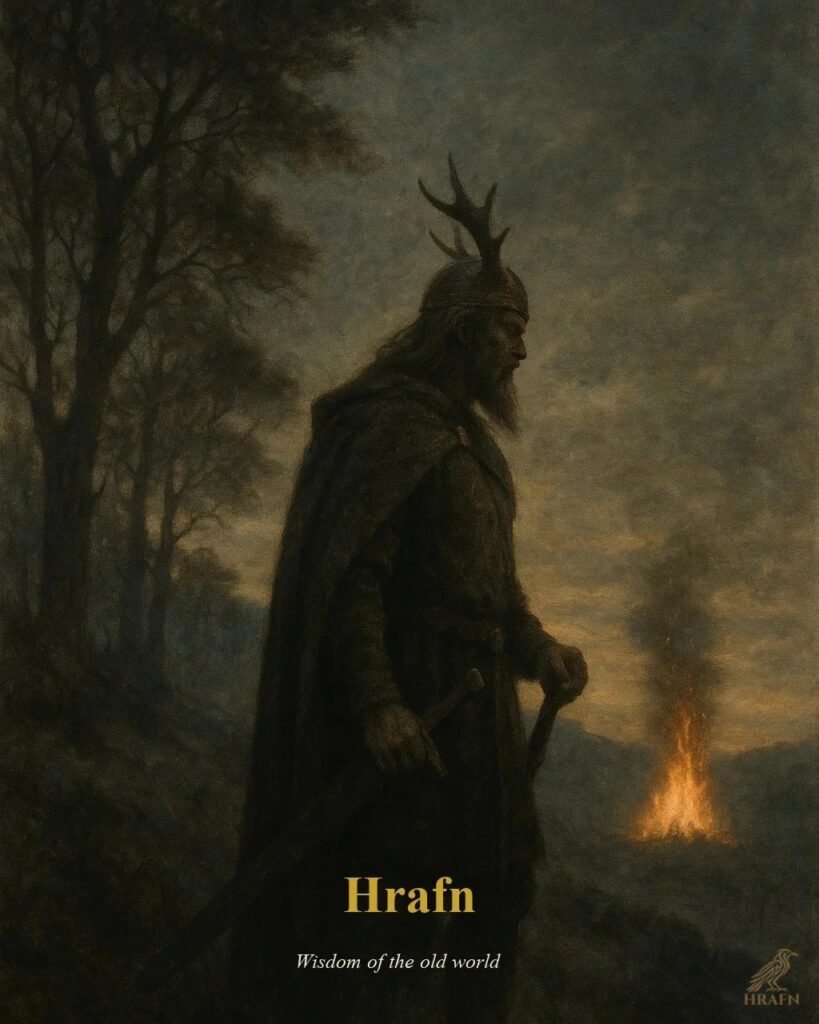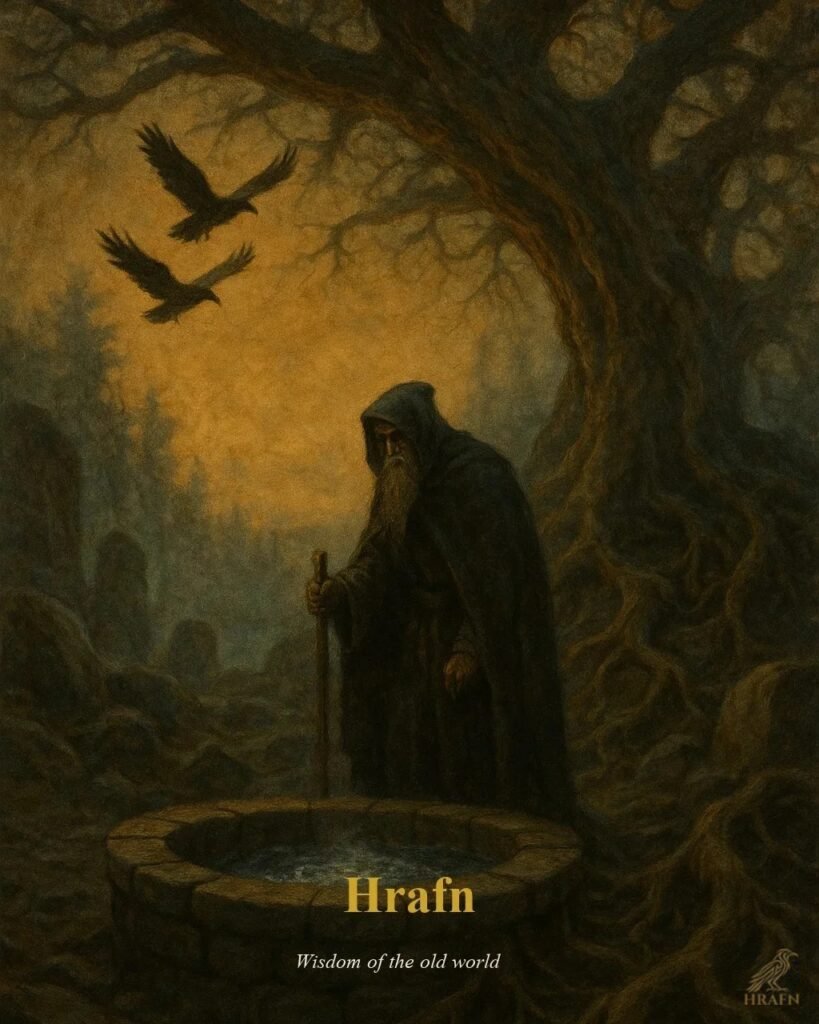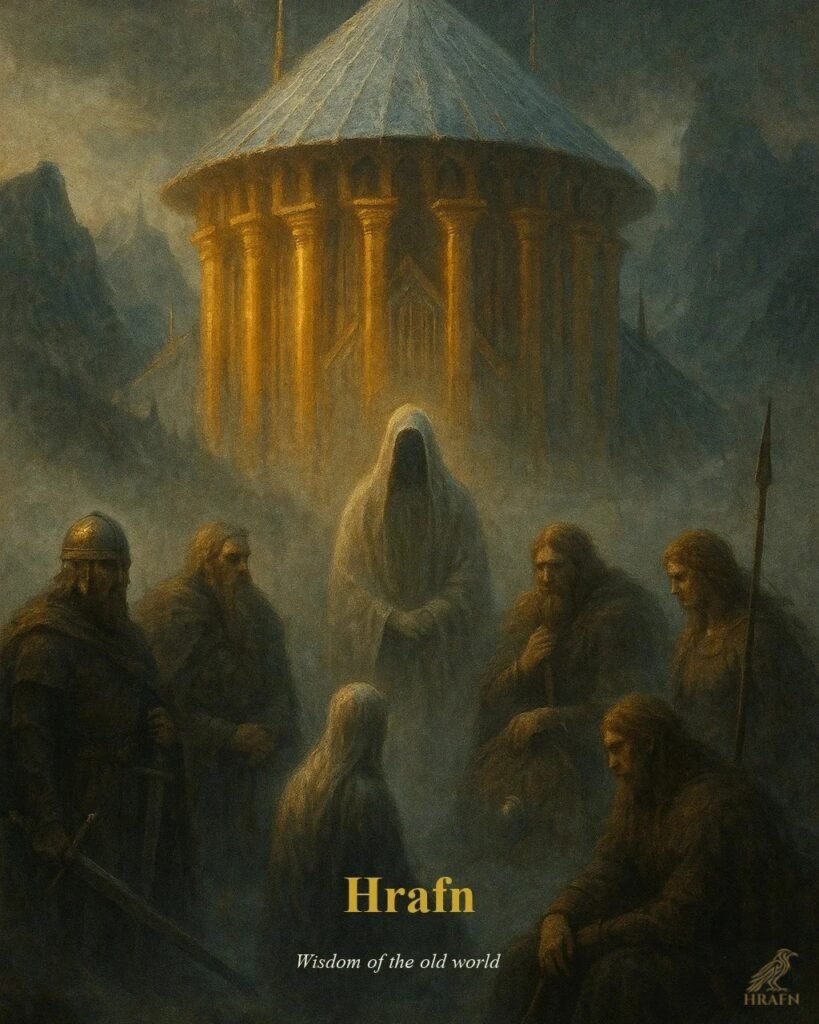
Picture a tongue covered in runes. Every word that flows across it becomes a verse. This is Bragi, the god of poetry.
The ancients firmly believed it: Bragi’s mouth shapes verses of a beauty no mortal can match. His words carry weight. They endure.
In Valhalla, his most important task awaits. There he welcomes the fallen warriors fresh from battle. He receives them with open arms and entertains the assembly of gods with stories. He tells of heroic deeds. Of ancient times that no one should ever forget.
Family
Bragi’s wife is Idun, keeper of the apples of youth with which the gods preserve their immortality. Interestingly, his name closely matches that of the historically attested skald Bragi Boddason, who lived in the 9th century and is considered one of the earliest named skalds of Northern Europe. Some scholars suspect that the god Bragi is a later deification of this poet, while others see it the other way around: that the historical skald was named after the god. This ambiguity makes Bragi one of the few deities whose origin may lie in a real human figure. (Source: Snorri Sturluson, Prose Edda, Skáldskaparmál)
Bragi Tells of the Mead of Poetry
In the Prose Edda, it is Bragi himself who, at a feast held by the sea-giant Aegir, tells the story of how the art of poetry came to humankind. In the beginning was Kvasir, a being created from the spit of all the gods, so wise that he could answer any question. Two envious dwarves, Fjalar and Galar, killed him and mixed his blood with honey into a mead that granted the gift of poetry to anyone who drank it. After passing through several hands – including a giant named Suttung – the mead finally came into Odin’s possession: he transformed into an eagle to steal it from Suttung’s mountain and carried it back to Asgard. Ever since, Odin distributes a portion of this mead to poets and skalds, and Bragi himself is said to have been the first to taste it. (Source: Snorri Sturluson, Prose Edda, Skáldskaparmál)
Lokasenna – The Bench-Ornament
At the drinking feast described in the Eddic poem Lokasenna, Bragi at first tries to keep the peace. He offers Loki his sword, his horse, and an arm-ring, just so Loki won’t stir up conflict. Loki is not appeased and mocks Bragi as a mere “bench-ornament” – someone who speaks grand words but shies away from real combat. Only when Bragi grows enraged and threatens a sword-stroke does his wife Idun urge him to calm down, so as not to let the feast escalate. The scene reveals a very human side of the otherwise eloquent god: even the master of fine speech can be provoked to lose his composure by mockery. (Source: Poetic Edda, Lokasenna)
Bragi guards the craft of the skalds – the art of composing and reciting once practiced by the skalds, the singers and poets of the North. He is their model. Every skald who ever recited a saga or sang a battle-song anywhere in Northern Europe stood in his shadow.
This idea lives on to this day: words can be more than mere sound. Used well, they carry memory across centuries. Bragi knew this long before we did.
Sources
The story of the mead of poetry and Bragi’s possible connection to the historical skald Bragi Boddason are recorded chiefly in Snorri Sturluson’s Prose Edda (Skáldskaparmál, 13th century). The confrontation with Loki comes from the Eddic poem Lokasenna. Since these texts were only written down centuries after Scandinavia’s Christianization, contradictions and later influences in the sources cannot be ruled out.