Sigurd and Fafnir
An otter lies dead on the riverbank. No one suspects that this single death will consume an entire family – and in the end turn a man into a dragon.
Loki kills the animal, not knowing it is Otr, son of the farmer Hreidmar, transformed into otter shape. The father demands compensation. No ordinary compensation: his son’s skin must be entirely filled with gold and covered on the outside as well. Beneath this gold lies a ring. Andvaranaut. A curse clings to it.
Greed Needs No Demons
The curse takes effect at once – with no sorcery required. Hreidmar refuses his own sons a share of the gold. They kill him for it. Then one of the brothers, Fafnir, does the very same thing: he refuses his brother Regin half of the treasure.
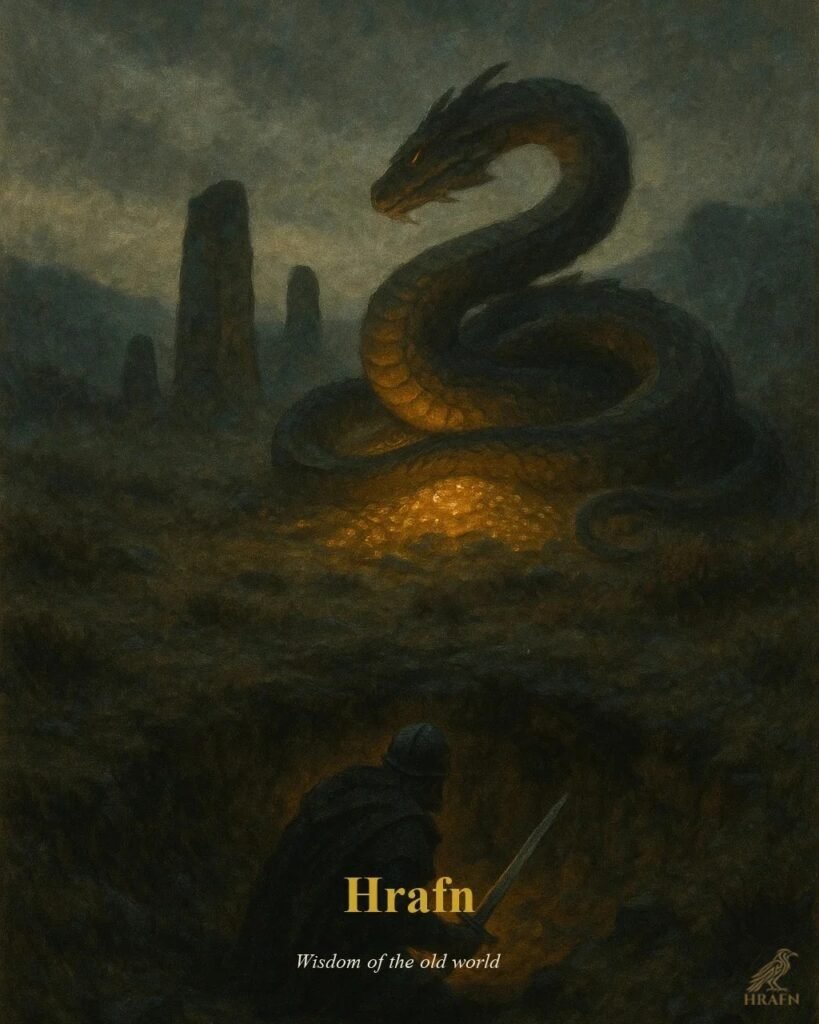
Fafnir withdraws, out onto the barren heath of Gnitaheath. There, of his own will, he transforms into a dragon. Why? To guard his gold more fiercely. His venom has seeped into the land ever since, poisoning everything around it. The story says it plainly: whoever wants to possess everything ceases to be human.
A Sword, a Pit, a Betrayal
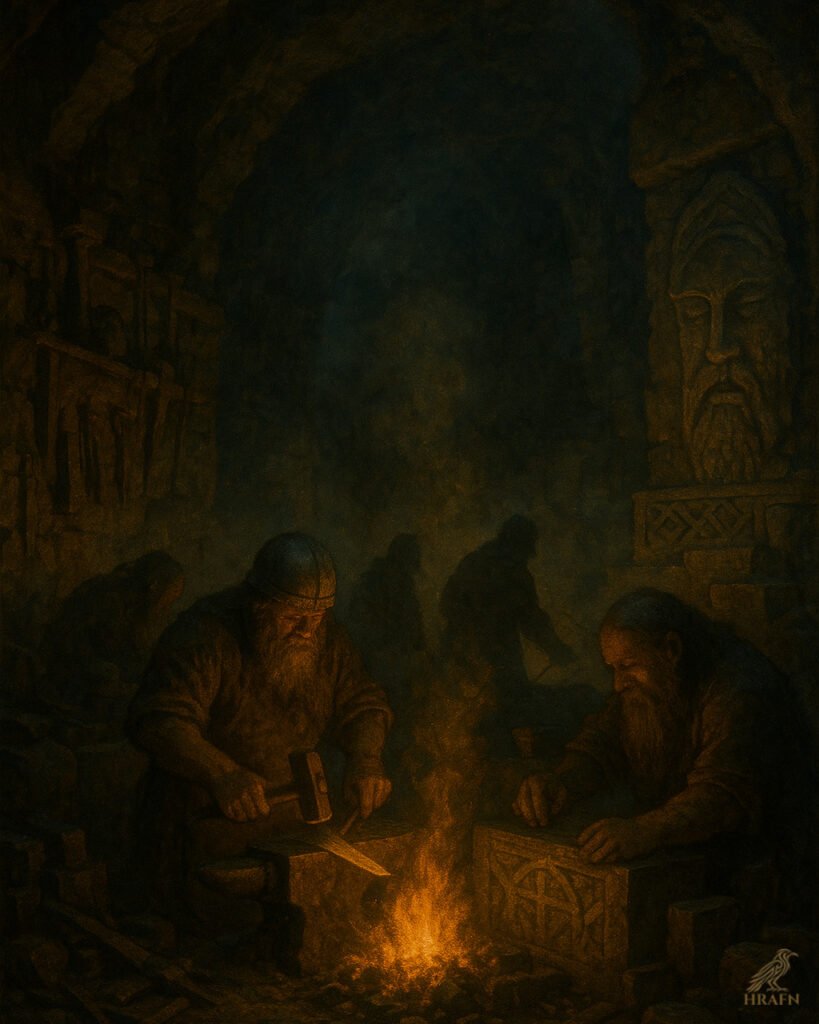
Regin, the brother left empty-handed, forges a new sword from old fragments: Gram. He gives it to Sigurd, his foster son. Sigurd tests the blade and splits an anvil with it – effortlessly, in a single stroke.
Then he plans the trap. Fafnir crawls the same path to the water every day. Sigurd digs a pit directly beneath it, hides, and waits. As the dragon crawls over him, he strikes upward from below. Fatal.
While roasting Fafnir’s heart, Sigurd burns his thumb. He puts it in his mouth to ease the pain – and tastes the dragon’s blood. In that instant, he suddenly understands the language of the birds above him. They warn him: Regin is plotting betrayal. Sigurd does not hesitate. The same blade that killed the dragon now fells the brother too.
The Helm That Saves No One
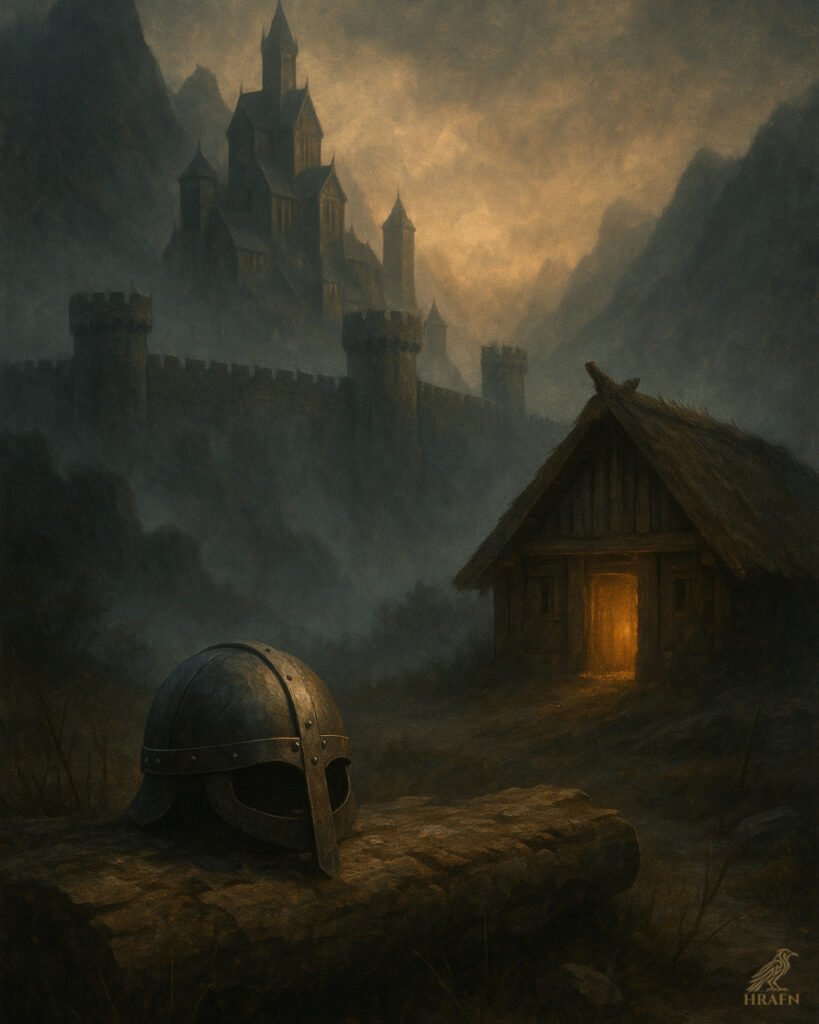
Even as a dragon, Fafnir boasted of his treasure: the Aegishjalmr, the Helm of Terror. Not a myth, but a real helm from the hoard – an object before which every living thing trembles. But fear offers no protection when true wrath stands against it. Sigurd proves it.
What remains of this story is more than a saga. Around the year 1030, people carved these scenes into stone – the famous Ramsund carving in Sweden. At the Hylestad portal in Norway, craftsmen carved seven images of this story into church wood. The dragon had long since become legend. But its lesson – that greed devours a person – the ancients carved into rock, so that no one would forget.
Sources
This tale has been passed down mainly through the Poetic Edda and Snorri Sturluson’s Prose Edda. As with all orally transmitted myths, the material was only written down centuries after it originated, so later influences and differing versions cannot be ruled out.