The Fall of the Nibelungs
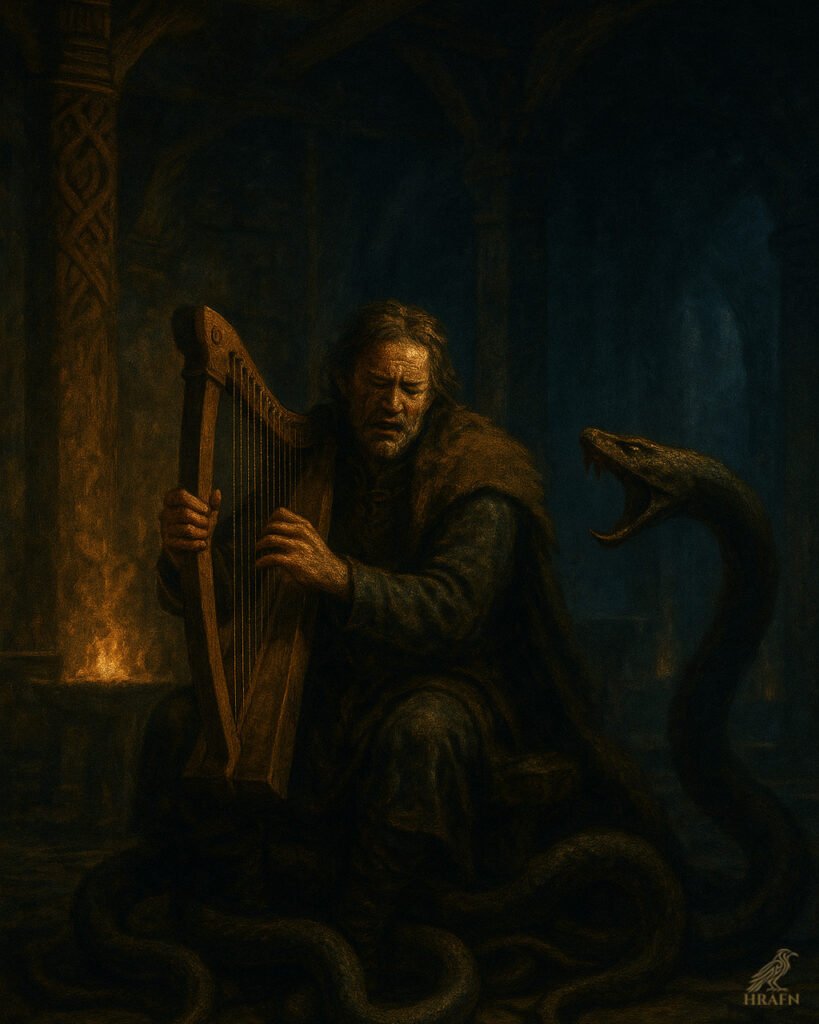
Picture a hall. Fire crackling, mead flowing–and a man playing the harp while serpents coil around his legs. He knows one is about to bite. He keeps playing anyway.
This isn’t invention. It’s the core of one of the North’s darkest stories–and it doesn’t begin with gods, but with a real massacre.
A Kingdom Falls on the Rhine
The year 436. On the Rhine, Hunnic auxiliaries in Roman service crush the Burgundian kingdom. King Gundahar dies. A chronicler later records some 20,000 dead. Numbers like these fade with time–but stories outlive them. Out of this catastrophe, over centuries, a saga grows: that of the Gjukung line. The North calls them the Niflungar.
Atli’s Greed, Gudrun’s Brothers
The Norse version of this saga knows no mercy. Atli, ruler of the Huns, wants gold. He invites the brothers of his own wife Gudrun to his court–planning to kill them. The brothers know it. They come anyway. Their silence is the only thing still theirs to keep.
What follows is cruel and quickly told: Högni’s heart is cut from his chest. Gunnarr is thrown into a pit full of snakes. There he reaches for a harp and plays–until an adder strikes. Not a word about the treasure ever falls. Their silence holds unbroken, to the death.
Gudrun’s Revenge
Then the story shifts perspective–and turns colder still. At the feast, Gudrun serves her husband Atli a dish. Only afterward does she tell him what he has eaten: his own sons. She kills him. She burns the hall down. This is no redemption. It is execution.
An Image That Has Outlasted Centuries
This scene has burned itself into wood. On the portal of Hylestad stave church, carved around 1200, Gunnarr lies among the serpents. His hands are free–he plays the harp with his feet.
What remains, in the end, is the harshest lesson of heroic poetry: gold binds people. Oaths bind harder still. Whoever carries both carries their own downfall with them. Not as punishment. As consequence.
(Source status: The historical core–the fall of the Burgundian kingdom in 436–is well established. The plot involving Atli, Gudrun, and the snake pit survives as mythological-literary tradition.)
Sources
This tale has been passed down mainly through the Poetic Edda and Snorri Sturluson’s Prose Edda. As with all orally transmitted myths, the material was only written down centuries after it originated, so later influences and differing versions cannot be ruled out.