Niflheim
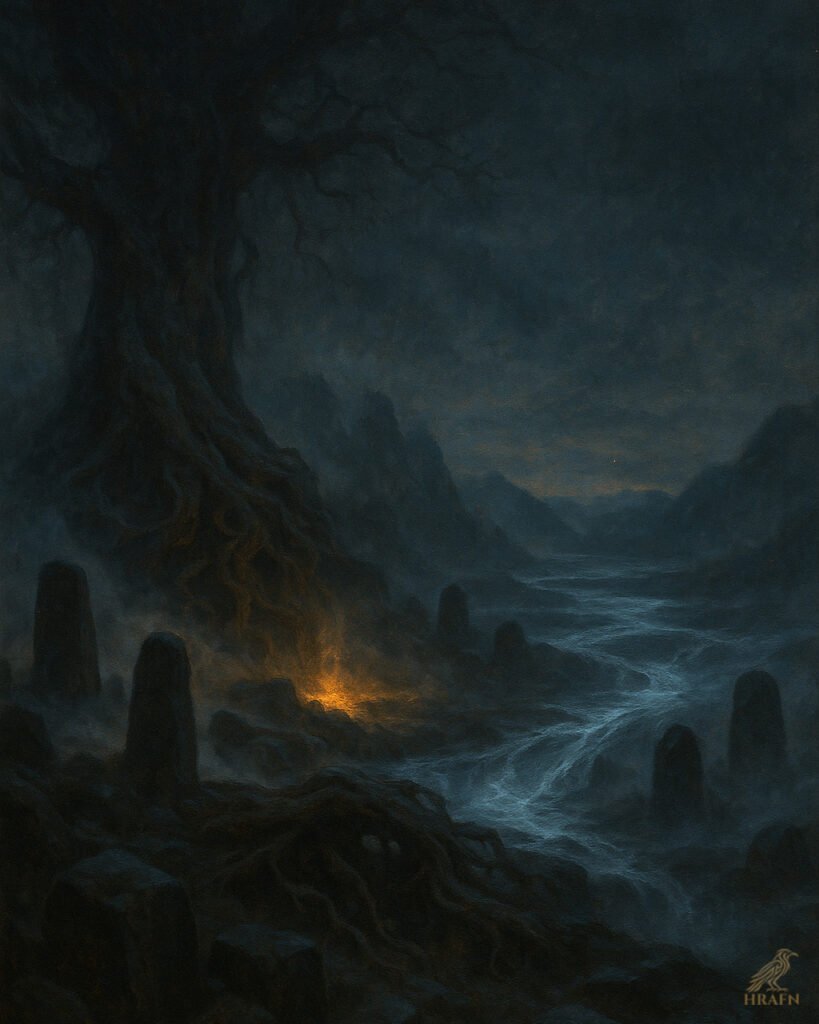
The world did not start with a bang. It started with fog.
The Misty World of the North
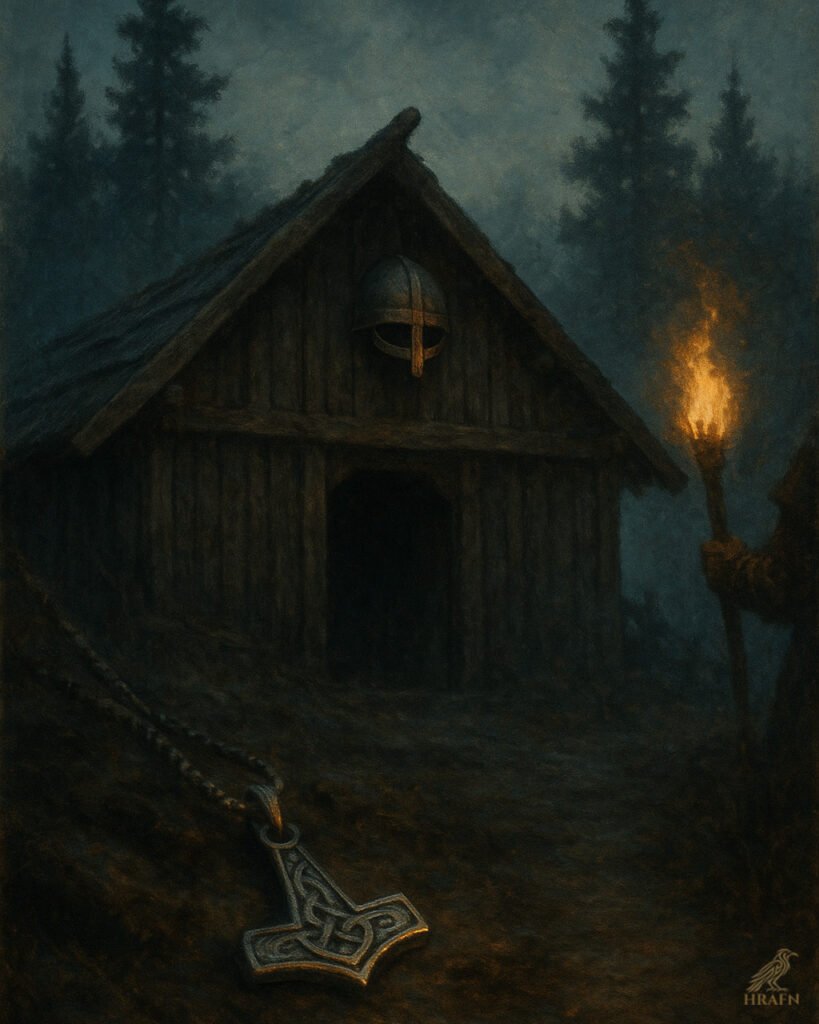
Around 1220, Snorri Sturluson described a realm in the far north: Niflheim, the “home of mist”. Freezing, silent, older than the earth itself. At its centre bubbled a spring called Hvergelmir. Rivers poured out of it with names like blades – Svol, Slidr, Gjoll. Gjoll ran right past the gates of the dead.
Where Opposites Collide
Far to the south burned Muspelheim, the world of fire. Between them yawned an emptiness: Ginnungagap. And there the real story happened. Ice drifted south, sparks flew north, and the frost began to melt. From the dripping venom grew Ymir, the first giant. Out of his body the gods later shaped the world.
That is the heart of Norse creation. Nothing is born from harmony. Life appears where opposites collide.
Hel’s Realm and a Linguistic Puzzle
Still, Niflheim stays a grim place. Odin hurled Hel, Loki’s daughter, down into the mist and handed her power over everyone who died of sickness or old age instead of battle. The third root of Yggdrasil, the world tree, stretches over Niflheim. Beneath it lies Hvergelmir – and there the dragon Nidhogg chews the wood.
One detail makes scholars uneasy. The word “Niflheim” never appears in the old mythological poems. Those poems speak of “Niflhel” instead. Even the manuscripts of Snorri’s own Edda swap the two names. Snorri may simply have invented the word.
The image survives anyway. In this story the fog is not a punishment. It is raw material. When you stand in the cold and cannot see the next step, you may be standing exactly where something is about to begin.
Sources
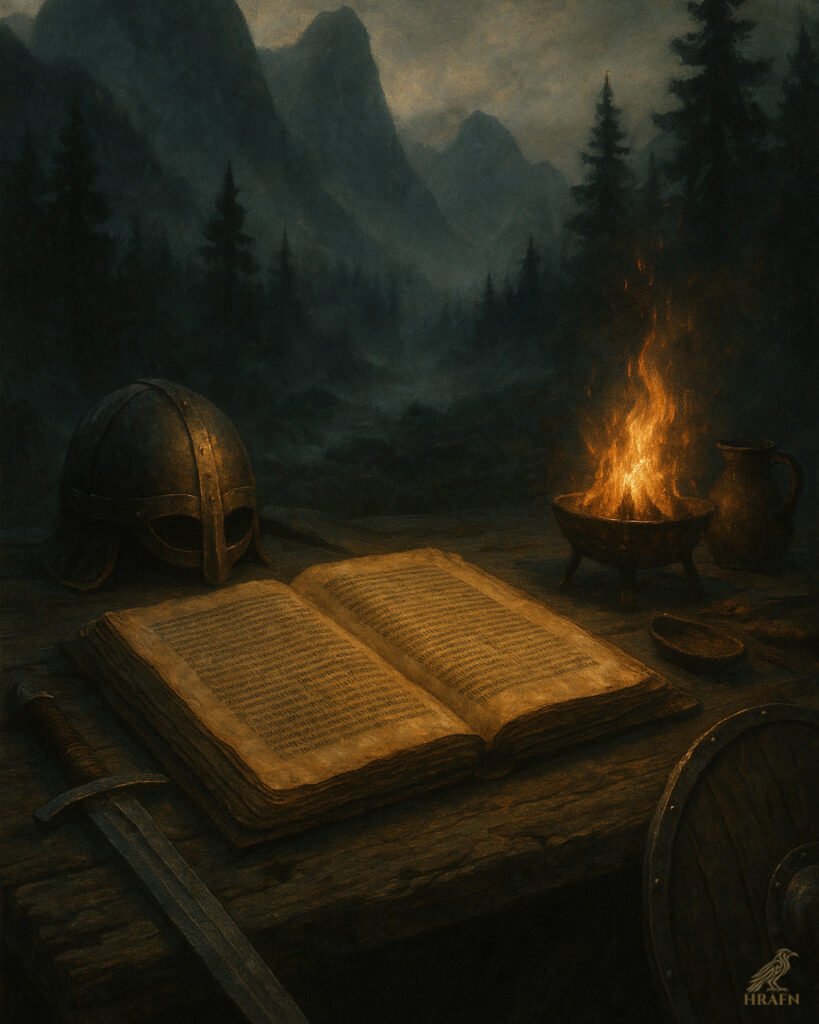
The description of Niflheim is based mainly on the Poetic Edda – particularly the Völuspá and Grímnismál – as well as on Snorri Sturluson’s Prose Edda, which first systematically compiled the oral tradition in the 13th century. As this is a mythological realm rather than a historical place, details vary between sources.