Svartalfheim
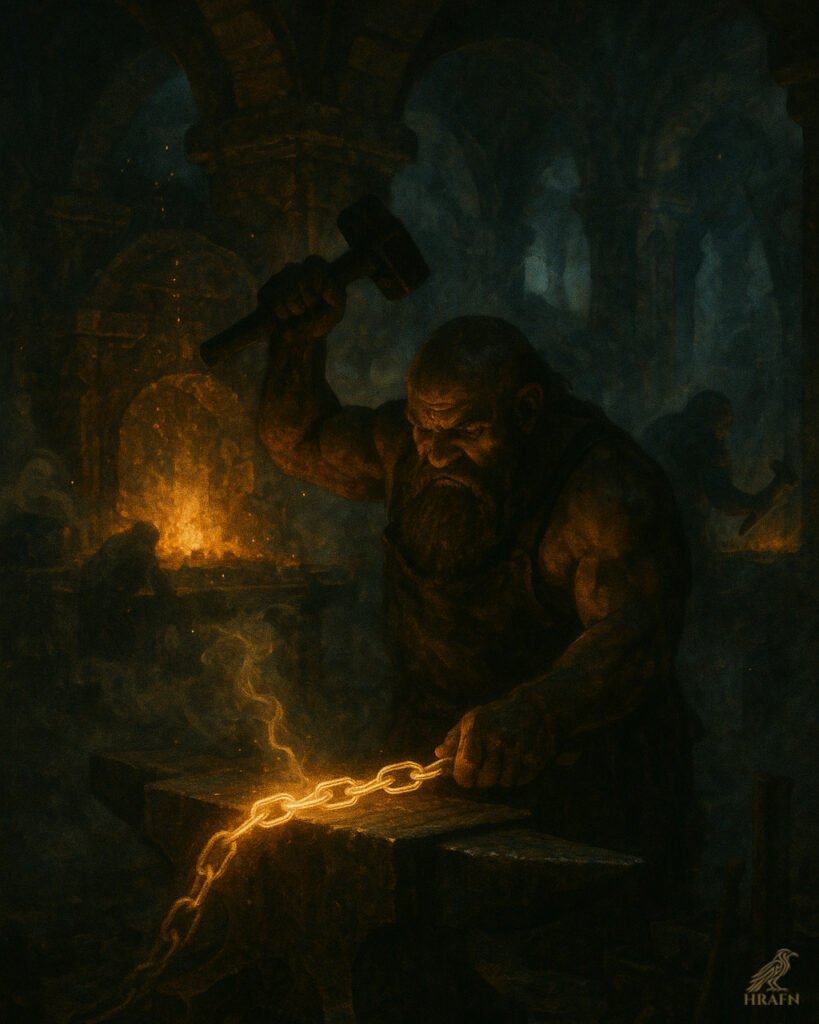
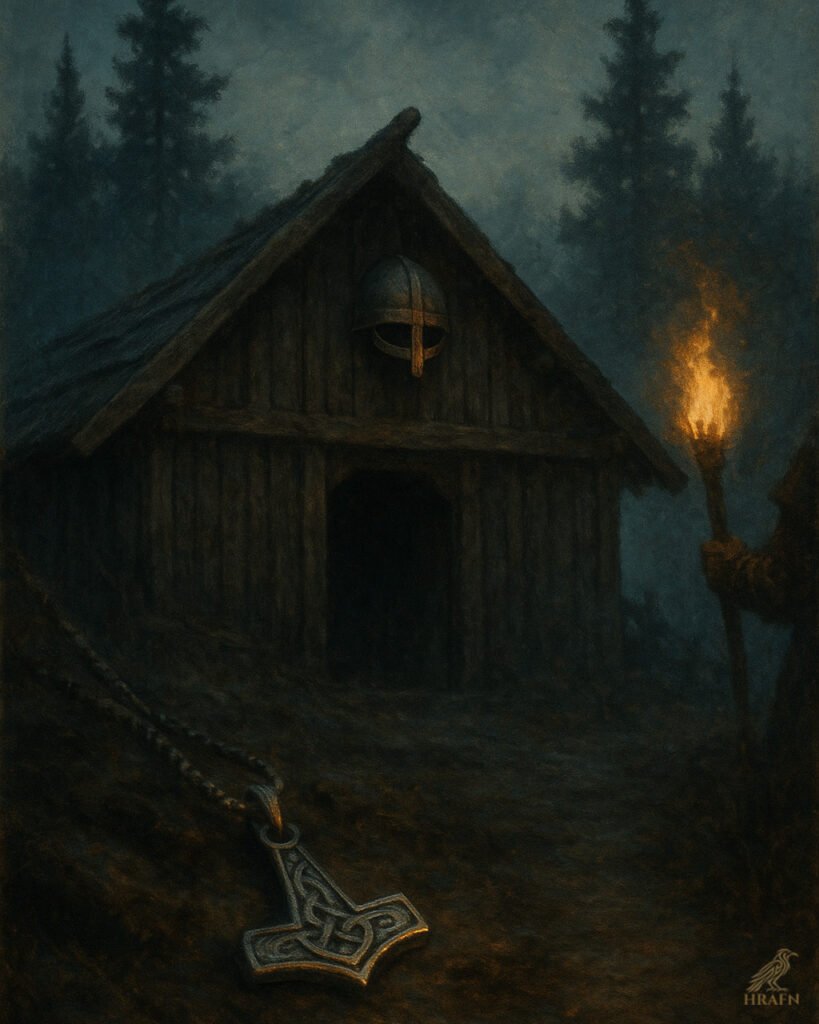
A wolf can chew through any chain. So the gods don’t visit the smith next door. They send a messenger down into the dark.
Skírnir, the god Freyr’s servant, travels to Svartálfaheimr, where dwarves forge Gleipnir – the fetter that holds the wolf Fenrir – out of impossible things like the sound of a cat’s footfall. Soft as ribbon. Stronger than iron. That is this realm in one object: the best work happens where nobody is watching.
Light Elves and Black Elves
The name means “home of the black elves”. In his Edda, Snorri Sturluson splits the elves in two: light elves in Álfheimr, “fairer than the sun”, and dark elves underground, “blacker than pitch”. A clean contrast – except it isn’t.
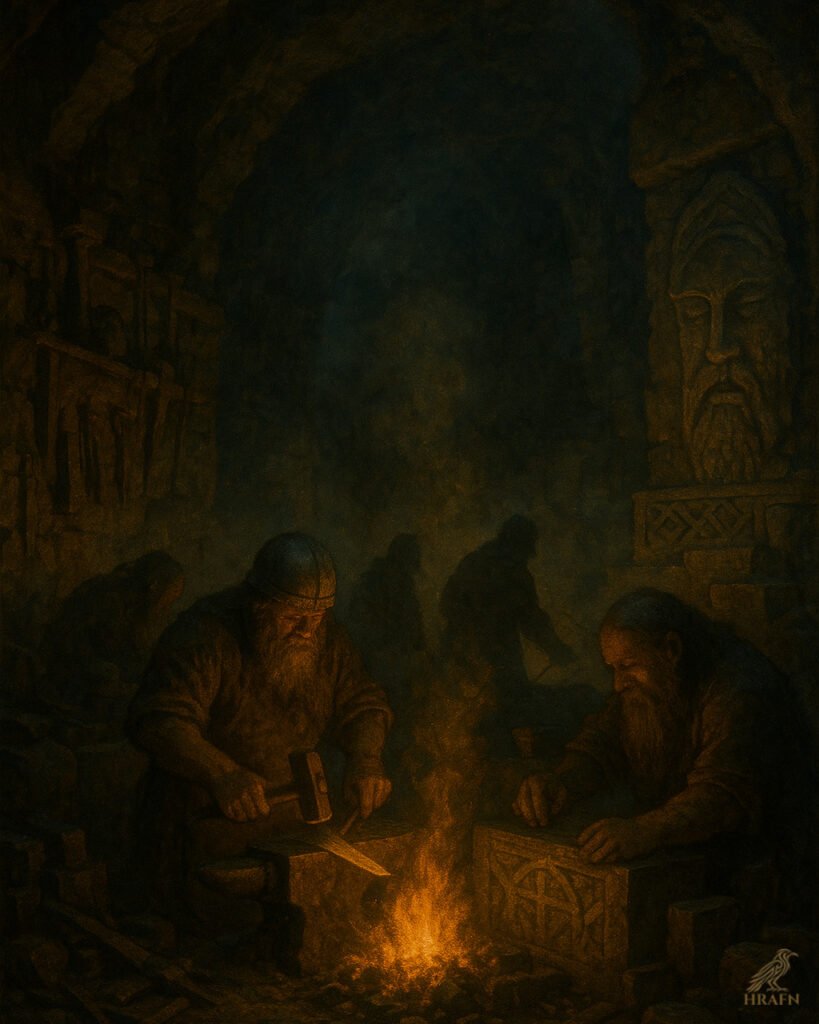
Read closely and the black elves act exactly like dwarves. In Skáldskaparmál they are the Sons of Ivaldi, the smiths who spin new golden hair for Sif. And only Snorri ever calls dwarves black elves; the very word Svartalfheim grows out of his own vocabulary. Rudolf Simek reads the sources as describing plain dwarves. Older poetry names the dwarves’ home differently: Niðavellir, the dark fields.
The Best Work Happens Unseen
What survives is the image. The brightest treasures in the myths – Mjölnir, Draupnir, Gleipnir – never fall from the sky. They come out of the mountain: soot, heat, patience.
Anyone building something that lasts already knows this place. It sits on no map. It sits in the hours nobody sees.
Sources
The description of Svartalfheim is based mainly on the Poetic Edda – particularly the Völuspá and Grímnismál – as well as on Snorri Sturluson’s Prose Edda, which first systematically compiled the oral tradition in the 13th century. As this is a mythological realm rather than a historical place, details vary between sources.