Björn Ironside
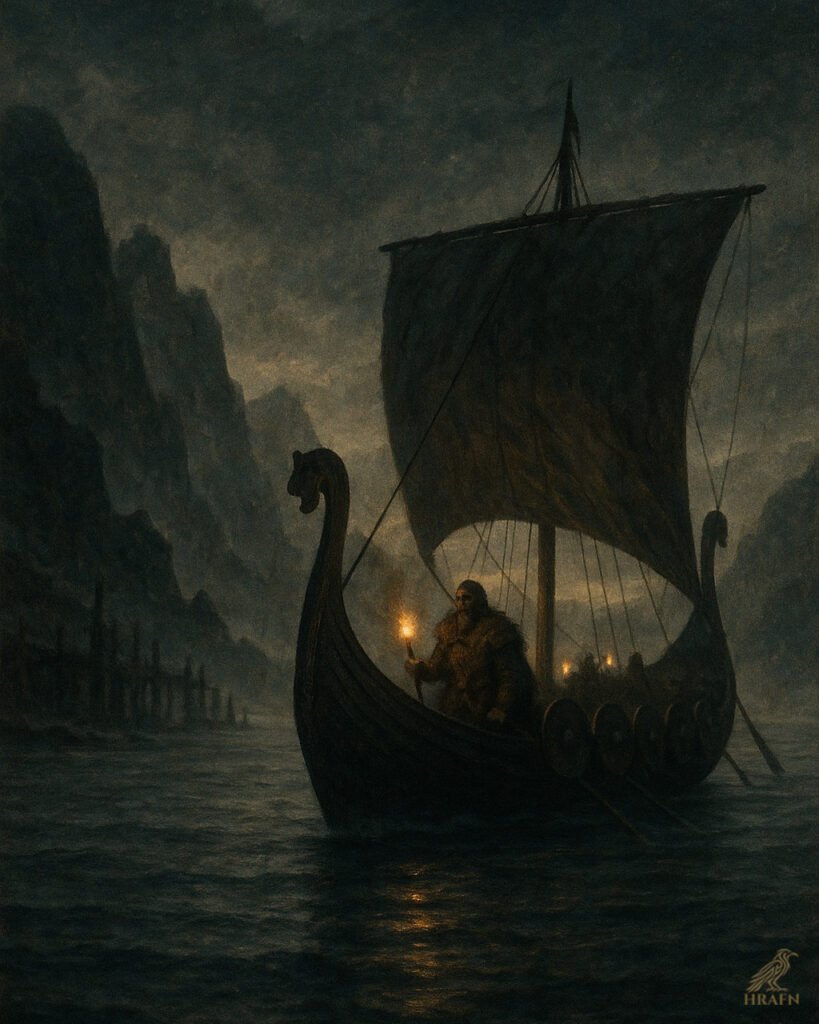
Björn Ironside – Old Norse Bjǫrn Járnsíða – appears in the Icelandic sagas as a son of Ragnar Lodbrok, the legendary Viking king. His byname “Ironside” is said to allude to extraordinary combat strength or invulnerability; the sources never explain it directly.
Son of Ragnar, Brother of Legendary Warriors
The Ragnarssona þattr, a short Icelandic tale about Ragnar’s sons, places Björn among a line-up of famous brothers: Ivar the Boneless, Halfdan, Ubba, and, in some traditions, Sigurd Snake-in-the-Eye. Together they shape the image of a Viking dynasty whose deeds stretched across half of Europe – from England to France to the Mediterranean.
What the Saga Tells
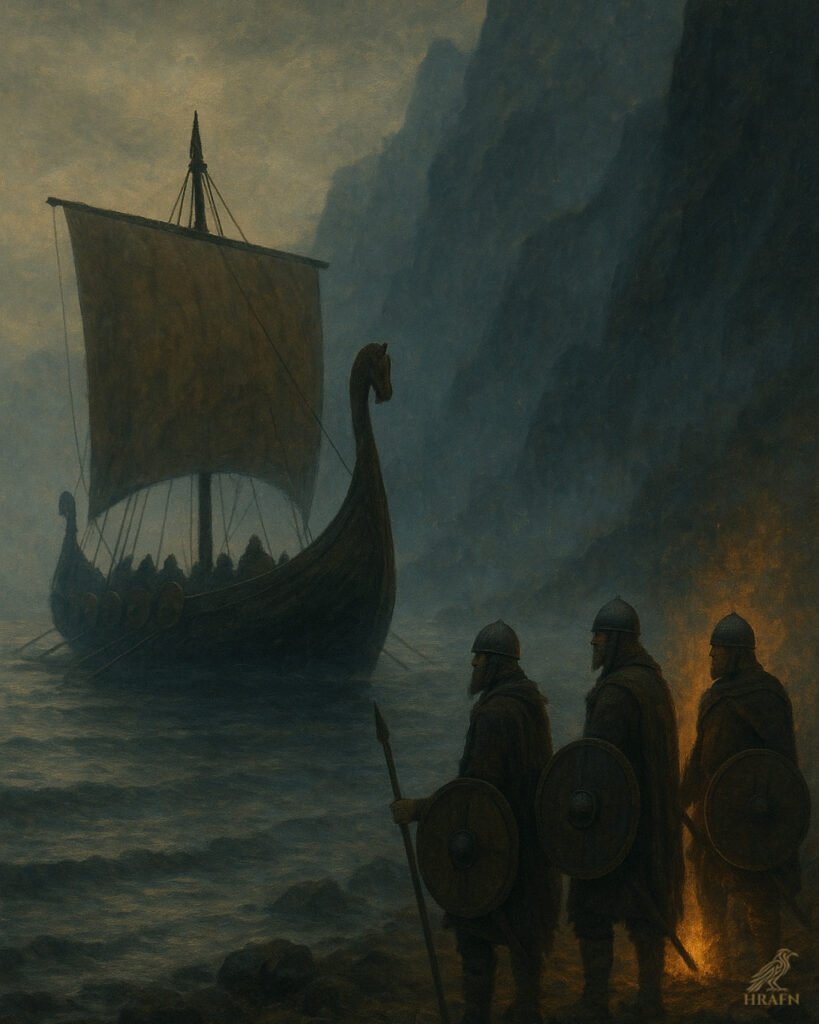
The Ragnarssona þattr has Björn ride with his brothers Ivar the Boneless, Halfdan, and Ubba in the “Great Heathen Army” against England – the campaign that, from 865 onward, shook several Anglo-Saxon kingdoms. Unlike his brothers, tradition has Björn turn more toward the continent: sagas credit him with raids along the French Atlantic coast and even into the Mediterranean, with targets as far as Pisa.
The Mediterranean Campaign
The most vivid source for this campaign comes not from Scandinavia but from a Norman clergyman: around the year 1015, Dudo of Saint-Quentin describes in his chronicle De moribus et actis primorum Normanniae ducum a Viking expedition along the Iberian and Italian coasts, led by a Hastein and a “Bier Costae Ferreae” – Latin for Björn Ironside. The best-known part of this account is the sack of Luna: the Vikings are said to have mistaken the city for Rome and captured it through a ruse – reportedly by having Hastein feign his own death so that his “corpse,” along with his retinue, would be brought inside the city walls before the attack began. Whether Björn was actually part of this campaign, or whether the attribution came later, can no longer be established with certainty.
Historical Traces
His role as a dynastic founder rests on firmer historical ground. Björn is regarded as the founder of the Munsö dynasty, an early Swedish royal line based on the island of Munsö in Lake Mälaren, as recorded among other places in the king-lists of the Hervarar saga ok Heiðreks. Several later Swedish kings claimed descent from him – whether rightly so can no longer be established with certainty, since Ragnar Lodbrok himself is more a legendary figure than a documented historical person, possibly combining several real Viking leaders into one. Some scholars further connect Björn with the Swedish king “Björn” mentioned in Rimbert’s Vita Ansgari, at whose court in Birka the missionary Ansgar was received around 829 – an identification that remains contested, since it could equally be a different ruler of the same name.
Björn stands as an example of many Viking-age princes: half warrior, half founding myth, whose deeds only crystallized in writing centuries later – with all the glory, and all the blur, that brings.
Sources
The foundation for Björn’s biography rests chiefly on the Ragnarssona þattr and other Icelandic saga texts, which name him as a son of Ragnar Lodbrok and brother of Ivar the Boneless. The Mediterranean campaign is described independently in Dudo of Saint-Quentin’s Norman chronicle De moribus et actis primorum Normanniae ducum (c. 1015), and his role as ancestor of the Munsö dynasty in the Hervarar saga ok Heiðreks. Since these texts were often written centuries after the events they describe and frequently blend historical fact with legendary embellishment, many details of Björn’s life remain contested among scholars.