Halfdan Ragnarsson
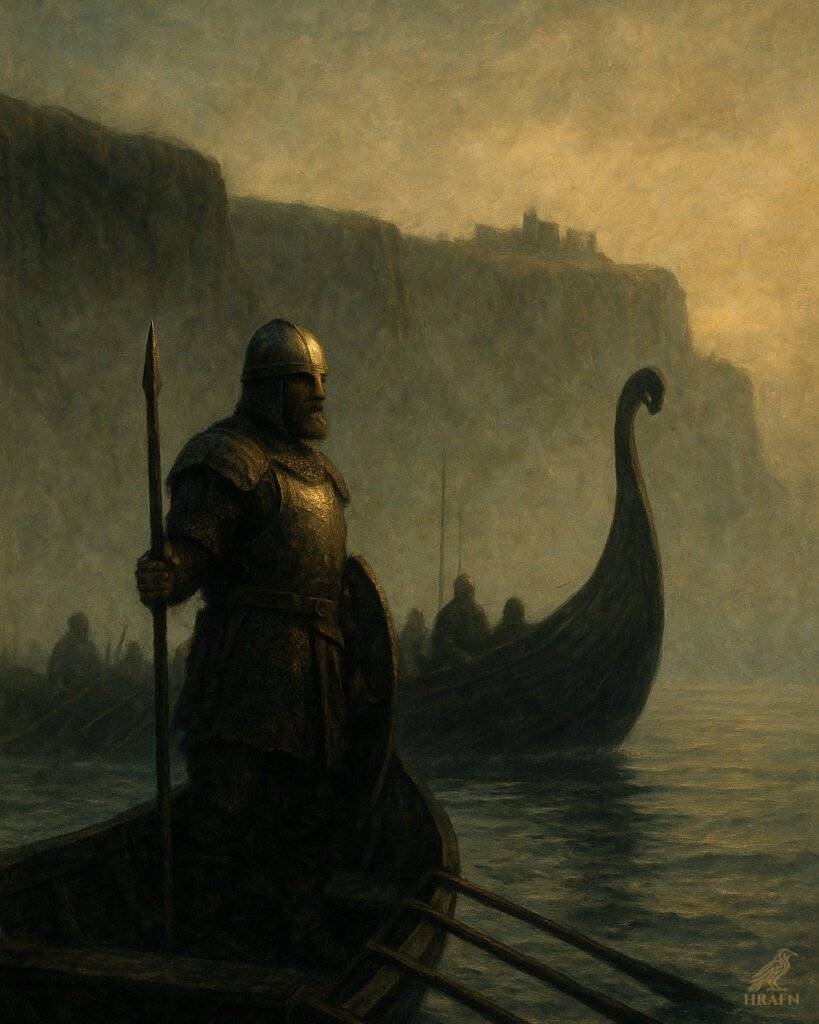
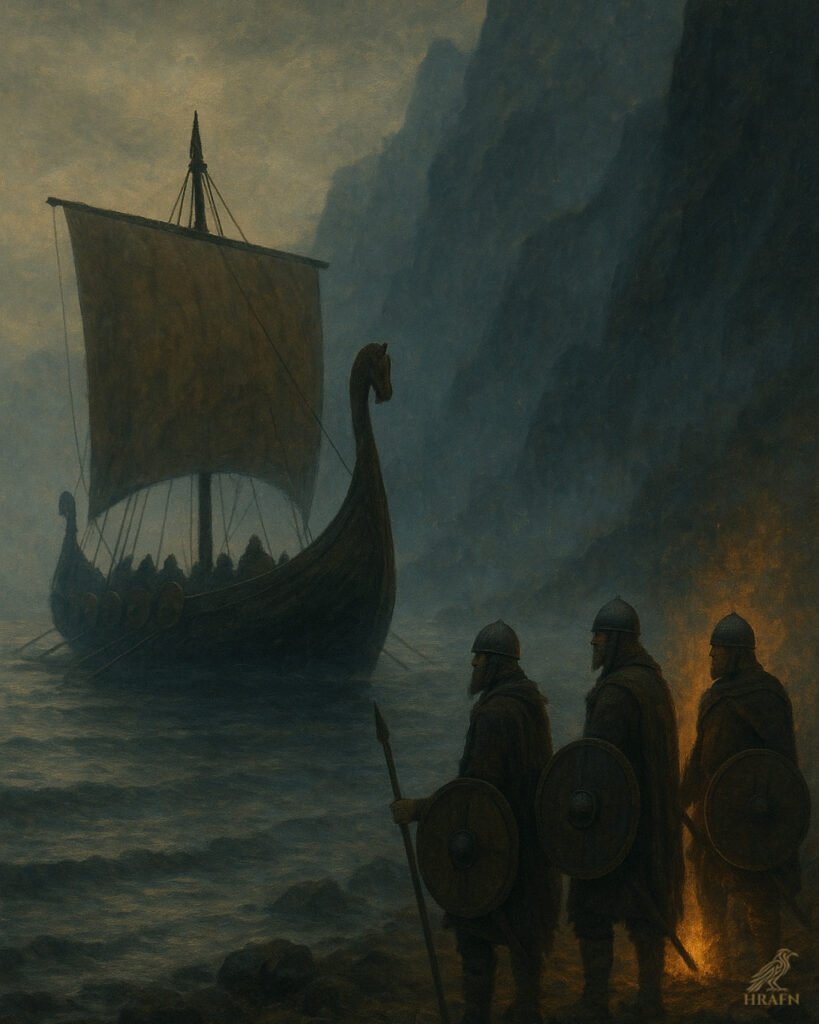
A kingdom falls, and no one records quite why the Vikings came. In 865, a vast army from the north lands on England’s shores. It does not settle for a single raid. It stays for years. At its head stands a man the Anglo-Saxon Chronicle marks with a single grim label: heathen king. His name is Halfdan Ragnarsson, and he redraws the map of England for good.
Origins and the Shadow of Ragnar
The sagas give Halfdan a famous father: Ragnar Lodbrok, that legendary Viking whose deeds sit half in history, half in myth. His mother, they say, was Aslaug. Thirteenth-century Icelandic sagas spin a gripping tale: Ælla of Northumbria killed Ragnar, threw him into a pit of snakes, and Halfdan with his brothers sailed for vengeance. A fine story — but modern historians question it heavily. It was written centuries after the fact, by men who never raised a sword against York. Some scholars push further still, suggesting Halfdan may be the same man as another saga figure, Hvitserk. The two names never appear together in any source. What remains certain is simpler: a man named Halfdan led an army that shook England to its foundations.
York Falls: The Conquest of Northumbria
In 866 the Great Heathen Army finds a kingdom already tearing itself apart. Northumbria sits in the grip of civil war, two rivals, Ælla and Osberht, fighting over the crown. The army exploits the weakness and seizes York with barely a real fight. A year later the feuding kings attempt the impossible: they make peace with each other just long enough to strike back together. The counterattack ends in blood. Both kings die in the battle. Halfdan’s army installs a puppet ruler and pulls the strings from behind him. Northumbria now belongs to the Vikings.
Wessex in the Crosshairs
Over the winter of 870 into 871, the army turns on the strongest surviving English kingdom: Wessex. The Chronicle names two men as joint commanders of the campaign: Bagsecg and Halfdan. The assault does not deliver all of Wessex into Viking hands — that fate is averted, later, by another man, Alfred the Great. But Halfdan’s reach by this point extends into the economy itself: coins struck in London bear his name. A war leader who mints currency is no mere raider anymore. He is a ruler.
Land for the Victors: The Birth of the Danelaw
In 875 the great army splits in two. Guthrum leads his men south, deeper into Wessex. Halfdan turns north, back to Northumbria. There, in 876, he takes a step that outlasts any battle: he divides the land among his warriors. The chronicler Symeon of Durham records that the pagan king shared out Northumbria between himself and his followers. The new settlers plough the fields and support themselves — soldiers turned farmers. This act plants the seed of the Danelaw, the stretch of England where Danish law and Danish custom take root for generations. Halfdan does not just make history here; he plants it in the soil.
Northern Campaigns and Death at Strangford Lough
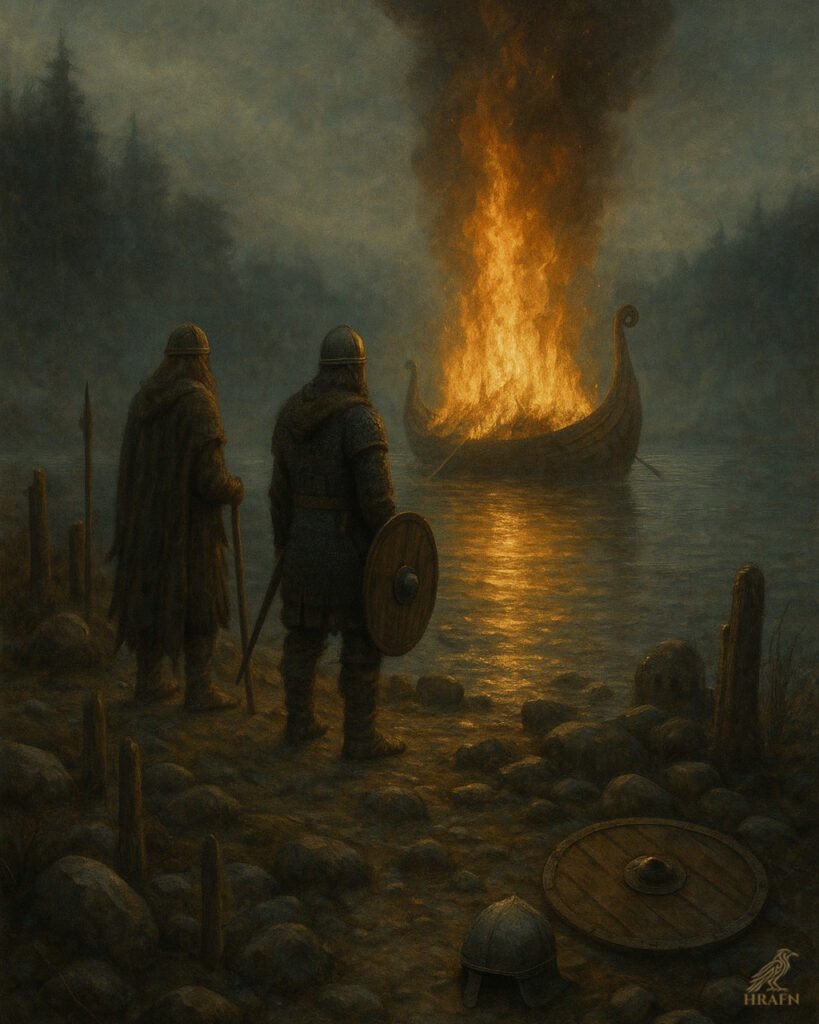
By 874 and 875, Halfdan uses his base on the Tyne to launch further campaigns. He strikes at the Picts and the kingdom of Strathclyde, defeating their king Constantín at the Battle of Dollar. His name reaches as far as Ireland: the Annals of Ulster record for 875 the treacherous killing of Dublin’s king Eystein by a man called Albann — the Irish rendering of his name. Two years later, Halfdan’s story ends. In 877 he falls at the Battle of Strangford Lough on the Irish coast. The man who took York and carved up a kingdom for his warriors dies far from the realms he conquered.
Sources
Halfdan leaves an unusually dense historical trail for a ninth-century Viking leader. The Anglo-Saxon Chronicle, the Annals of Ulster, and Symeon of Durham’s account each independently sketch his campaigns, his land division, and his death. Coins struck in his name confirm real authority over parts of England. The sagas tell a different kind of story: their tale of vengeance for Ragnar’s death took shape centuries later in Iceland, far from the events themselves, serving a good story more than a sober record. The proposed identification with Hvitserk likewise remains speculation, resting only on the absence of any source naming both men together. To understand Halfdan properly means separating the man of the chronicles from the avenging figure of the sagas.