Imagine knowing the fate of every human, every animal, every plant – and never being allowed to say a word. That is exactly Frigg’s burden. She sits at Odin’s side, reigns as queen of Asgard, and carries knowledge no one else could bear: she sees the end. Still, she stays silent. Because Frigg knows something important: no one can stop the inevitable. Already the Lokasenna of the Poetic Edda notes this: Frigg knows the fate of every being – yet never speaks it aloud.
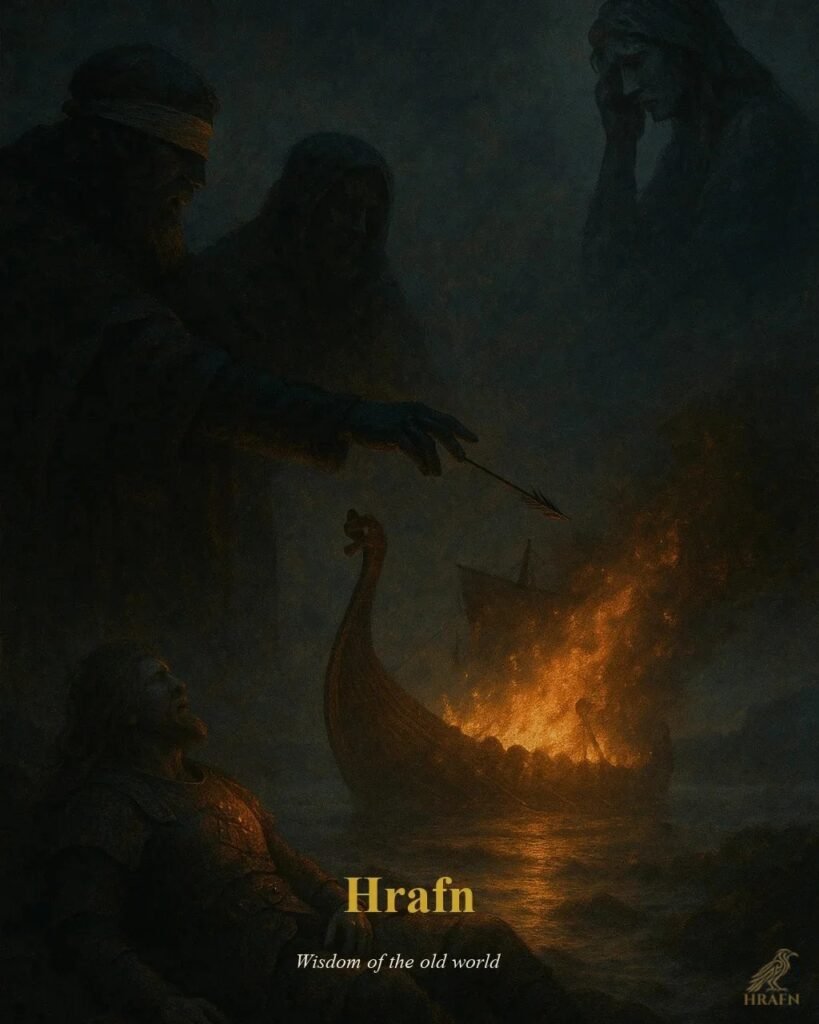
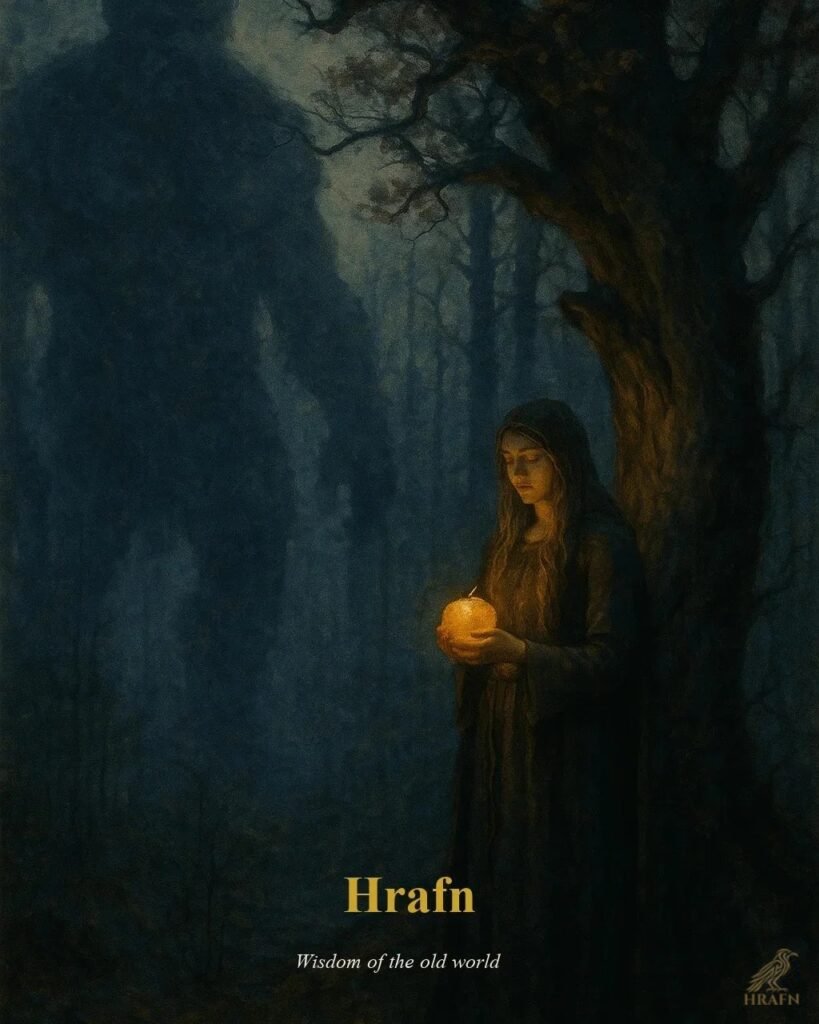
Then everything changes. Her son Baldr has nightmares. Night after night. The dreams whisper of his death. Frigg acts at once. She sets out and asks every thing in the world to swear an oath: fire, water, iron, stones, trees, sicknesses, animals – each one must promise never to harm Baldr. One after another, they take the oath. The world seems safe.
Family
Frigg is the daughter of the earth goddess Fjorgyn and Odin’s wife – at his side she reigns as queen of Asgard. With him she has the radiant Baldr and his blind brother Hod, who later kills him unknowingly. Some sources also name Hermod as a shared son.
Frigg also raises the mortal Agnar as his foster mother – a bond that later draws her into a bitter dispute with Odin. Her hall is called Fensalir, “marsh hall”: there she is served by a whole host of handmaidens, chief among them Fulla, who guards Frigg’s jewelry casket and keeps her secrets, and Gna, who rides the horse Hofvarpnir through the sky to carry messages for her. Another handmaiden, Hlin, watches over those humans who stand under Frigg’s special protection, according to the Voluspa.
The Mistake That Costs Everything
Only one plant Frigg overlooks: the mistletoe. It seems too small, too unassuming, too harmless to be a threat. This one gap becomes the fatal flaw. The mistletoe kills Baldr – and with his death begins the end that Frigg had known was coming all along.
Her knowledge of fate did not save her. Neither did her caution. Sometimes a single overlooked detail is enough to seal the course of events. Snorri tells of Baldr’s nightmares and Frigg’s failed oath in the Gylfaginning.
The Wager Over Geirrod
How far does Frigg’s judgment really reach? A wager with Odin puts it to the test. Odin praises his former foster son Geirrod, who has since become king. Frigg disagrees: Geirrod, she says, has grown stingy and cruel, a king who tortures guests for fun when too many arrive at once. Odin bets against her – and travels to Geirrod’s court disguised as a wanderer to prove her wrong.
Frigg does not let it go. Secretly, she sends a warning ahead: a dangerous sorcerer is on his way, recognizable by the fact that even dogs avoid him. Geirrod has the stranger – Odin, under the name Grimnir – seized and tortured between two fires for eight nights, without food or drink. Only Geirrod’s own son takes pity and secretly brings him water. When Grimnir finally reveals himself as Odin, Geirrod leaps up in shock to free him – and stumbles onto his own sword. In the end, Frigg is proven right: her judgment of character outmatched her husband’s wager. The Grimnismal of the Poetic Edda tells this dispute between the couple in full.
Lokasenna – Slander at the Feast
At the drinking feast at Aegir’s hall, Frigg too feels the sting of Loki’s tongue. He accuses her of having shared a bed with Odin’s own brothers, Vili and Ve, while Odin was away wandering – a charge echoed in the Ynglinga Saga, where Vili and Ve do in fact rule Asgard during Odin’s absence. Frigg does not let the accusation stand: had her son Baldr been in the hall, she warns, Loki would not have gotten away with it so easily. The poem Lokasenna of the Poetic Edda records this exchange.
The Weaver of Fates
To this day, Frigg reigns in her hall Fensalir. There she sits at the loom, spinning threads – threads that shape the destinies of humankind. She keeps weaving, even though she knows how the story ends. Perhaps this is her greatest strength: to keep going, even when you already know the end. The Grimnismal of the Poetic Edda already names Fensalir as Frigg’s hall.
In the game: how God of War portrays this figure — and where it departs from the sources — is covered in our mythology check.
Sources
The foundation for this article is mainly the Poetic Edda (including the poems Grimnismal and Lokasenna) and the Prose Edda of the Icelandic scholar Snorri Sturluson (13th century), especially the Gylfaginning. Baldr’s nightmares and Frigg’s failed oath go back to the Gylfaginning, the wager over Geirrod to the Grimnismal, and the accusation involving Vili and Ve to the Lokasenna, supplemented by the Ynglinga Saga. This is supplemented by further Old Norse sagas as well as archaeological and runic evidence. Since this material was only written down centuries after Scandinavia’s Christianization, contradictions and later influences in the sources cannot be ruled out.