A warrior falls in battle. Where does his soul go? Most say: to Valhalla, to Odin. But that is only half the truth. The other half of all the fallen belongs to Freya.
Freya is considered the most beautiful of the goddesses. She rules over love, beauty, and fertility. People know her as a gentle figure. But this image is deceiving.
A War Leader with Her Own Hall
Freya is no mere goddess of feelings. She is a war leader. Her hall is called Fólkvangr. Half of all those fallen in battle enter there. Odin claims the other half for Valhalla. Two gods, one claim on the dead. This shows: Freya’s power reaches far beyond love and beauty.
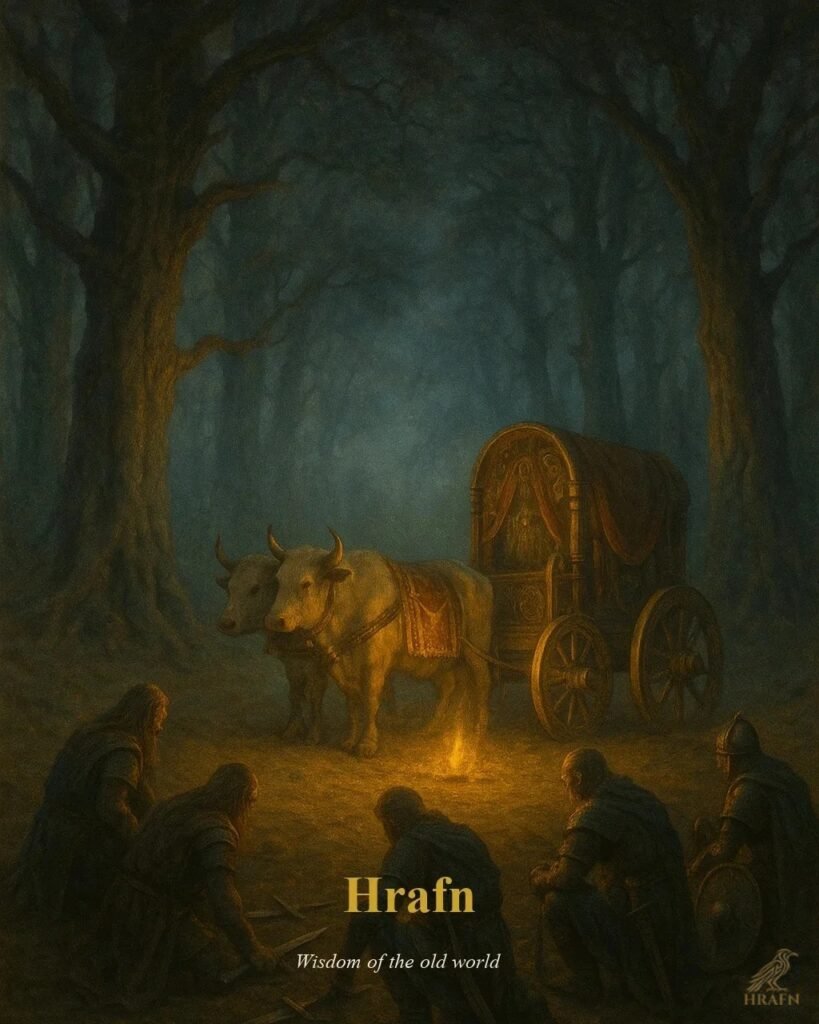
Her chariot is not drawn by horses. Two cats pull it through the worlds of Norse mythology. When she needs faster ways to travel, she reaches for her falcon cloak. It turns her into a bird and carries her through the air.
Family and the Wandering Od
Freya is the twin sister of Freyr and daughter of Njord. Her husband is named Od, but he wanders restlessly through the world and often leaves her behind. Out of longing, Freya weeps tears for him that turn to gold where they fall. With Od she has two daughters, Hnoss and Gersimi, whose names both mean roughly “treasure” or “precious thing.” (Source: Snorri Sturluson, Prose Edda, Gylfaginning)
Mistress of a Secret Art
Freya masters seidr magic, a form of divination used to read the future and steer fate. She was the one who first taught this art to the Aesir, the chief gods of Norse mythology. Without Freya, there would be no knowledge of what is to come. (Source: Snorri Sturluson, Ynglinga saga, in: Heimskringla)
Brisingamen – The Dwarves’ Necklace
Her most treasured possession is Brisingamen, a necklace crafted by dwarves. Dwarves count among the finest smiths in all the worlds. What they make endures. Brisingamen is therefore considered one of the most precious jewels of all. A later tale, the Sörla þáttr, claims Freya obtained the necklace from four dwarves after spending a night with each of them – but this story comes from a much younger, Christian-influenced source and is treated with more caution than the Poetic Edda. (Source: Sörla þáttr, 14th century)
Þrymskviða – The Marriage Proposal That Wasn’t
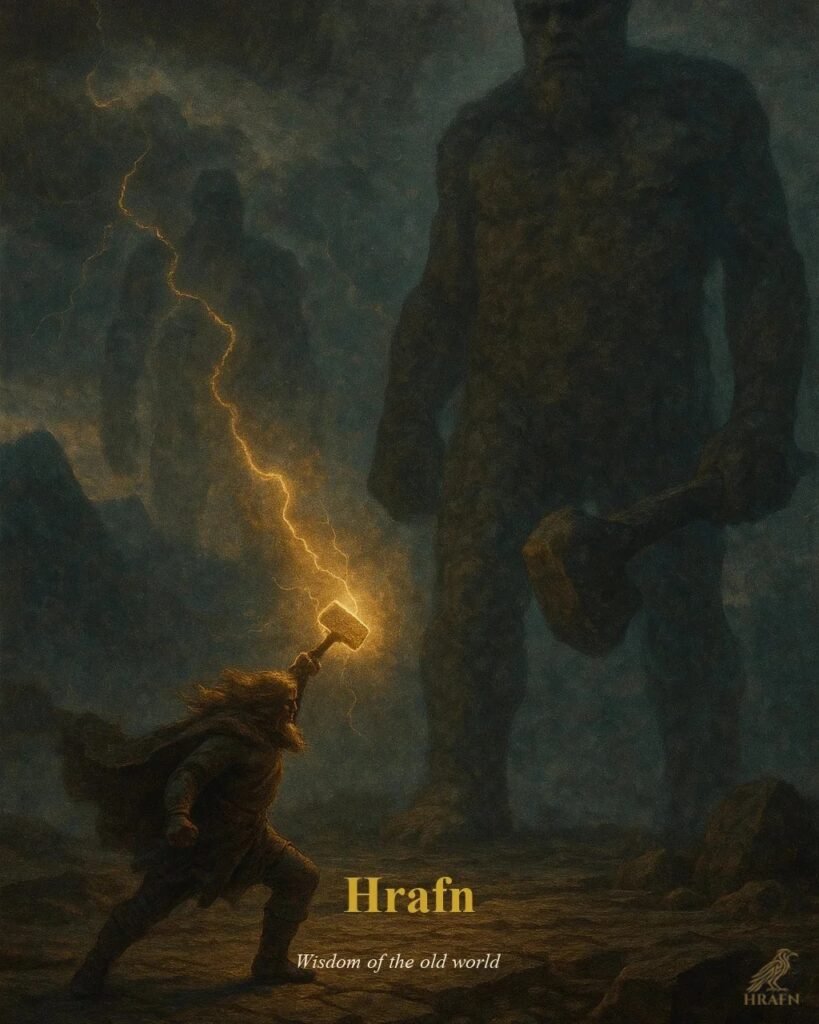
When the giant Thrym steals Thor’s hammer Mjölnir, he demands Freya as his bride in exchange. The gods ask Freya to dress in bridal garb and travel to Thrym. She refuses with such fury that the halls of the Aesir shake and Brisingamen snaps from her neck. In the end, it is not Freya but Thor, disguised as the bride, who travels to the wedding – and reclaims his hammer through trickery. (Source: Poetic Edda, Þrymskviða)
Lokasenna – Loki’s Accusation
At the drinking feast told in the Lokasenna, Loki accuses Freya of having slept with every god and elf present, including her own brother Freyr. Freya indignantly rejects the accusation, but Loki will not be swayed. The scene shows how deeply Freya’s reputation as goddess of love was already entangled with mockery and suspicion in the medieval sources. (Source: Poetic Edda, Lokasenna)
More Than an Image of Beauty
Freya unites what at first glance does not belong together: love and war, beauty and power, magic and death. That is exactly what makes her one of the most striking figures in Norse mythology. Whoever sees only the beautiful goddess overlooks the war leader beside her. Both belong to her, inseparably, like two edges of a sword.
In the game: how God of War portrays this figure — and where it departs from the sources — is covered in our mythology check.
Sources
The information on Freya draws mainly on the Poetic Edda (notably the Þrymskviða and Lokasenna) and the Prose Edda of the Icelandic scholar Snorri Sturluson (13th century), as well as his Ynglinga saga from the Heimskringla. The story of how Brisingamen was acquired comes from the considerably later Sörla þáttr (14th century) and is treated with caution by scholars. Since this material was only written down centuries after Scandinavia’s Christianization, contradictions and later influences in the sources cannot be ruled out.