Asatru
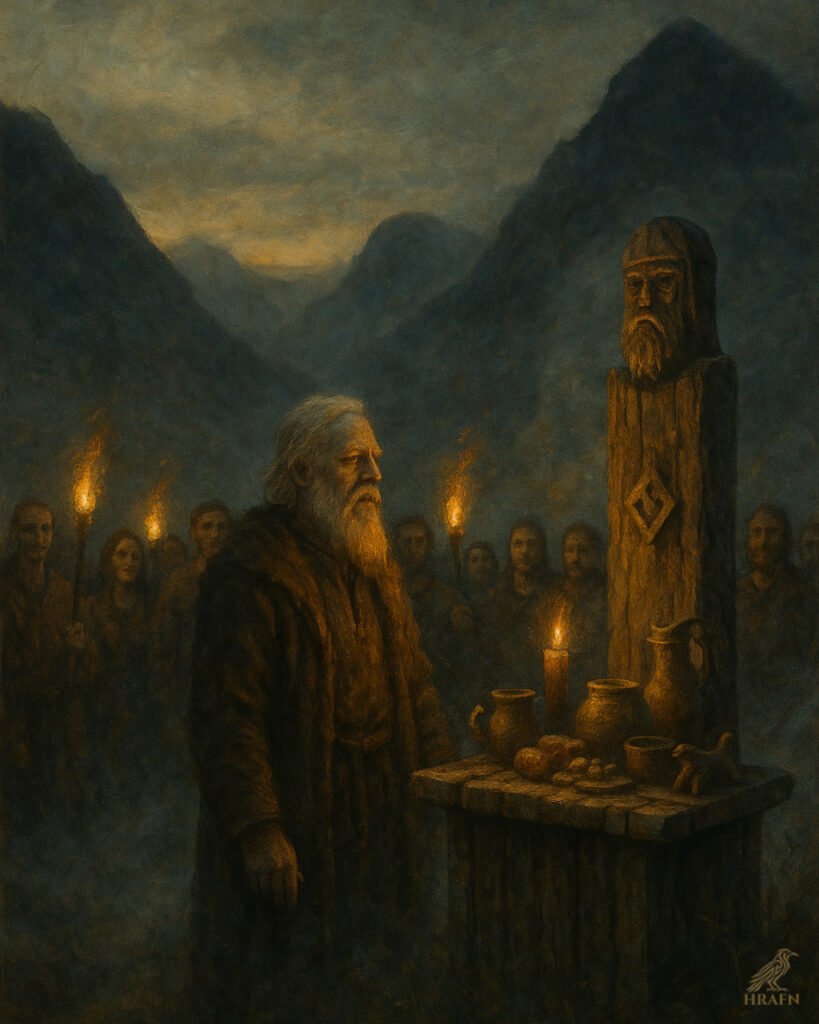
Summer solstice, 1972, Iceland. Farmer and poet Sveinbjörn Beinteinsson founds the Ásatrúarfélagið, the “fellowship of the Æsir faith,” together with a handful of like-minded followers. A year later, the Icelandic state officially recognizes it as a religion – nearly a thousand years after Iceland converted to Christianity at the Althing in the year 1000.
What Asatru Means
Asatru, literally “faith in the Æsir,” presents itself as a revival of pre-Christian Norse religion: seasonal festivals, offerings (blót) to Odin, Thor, Freyja and the other gods, gatherings held outdoors rather than in churches. Beinteinsson himself spoke less of doctrine than of a connection to the land and the wish that Icelanders could nurture a faith of their own, not an imported one.
Growth and Reality
The movement didn’t stay confined to Iceland. Today, the Icelandic Ásatrúarfélagið counts more than 4,000 members – one of the country’s largest non-Christian communities – and has inspired offshoots across Scandinavia, Germany, and North America.
One thing matters for understanding it correctly: Asatru is not an unbroken, thousand-year-old tradition. Centuries separate the last public blót of the Viking Age from the founding in 1972, with no organized practice in between. What is celebrated today is a deliberate, modern reconstruction – drawn from the Eddas and sagas, but rethought for a present that relates to the old gods differently than the Vikings did.
Sources
The information on Asatru is based partly on Old Norse primary sources such as the Poetic Edda, the Prose Edda and the sagas, and partly on publications and self-descriptions of modern Asatru communities as well as religious-studies literature on contemporary practice.