The Taking of Hymir’s Cauldron
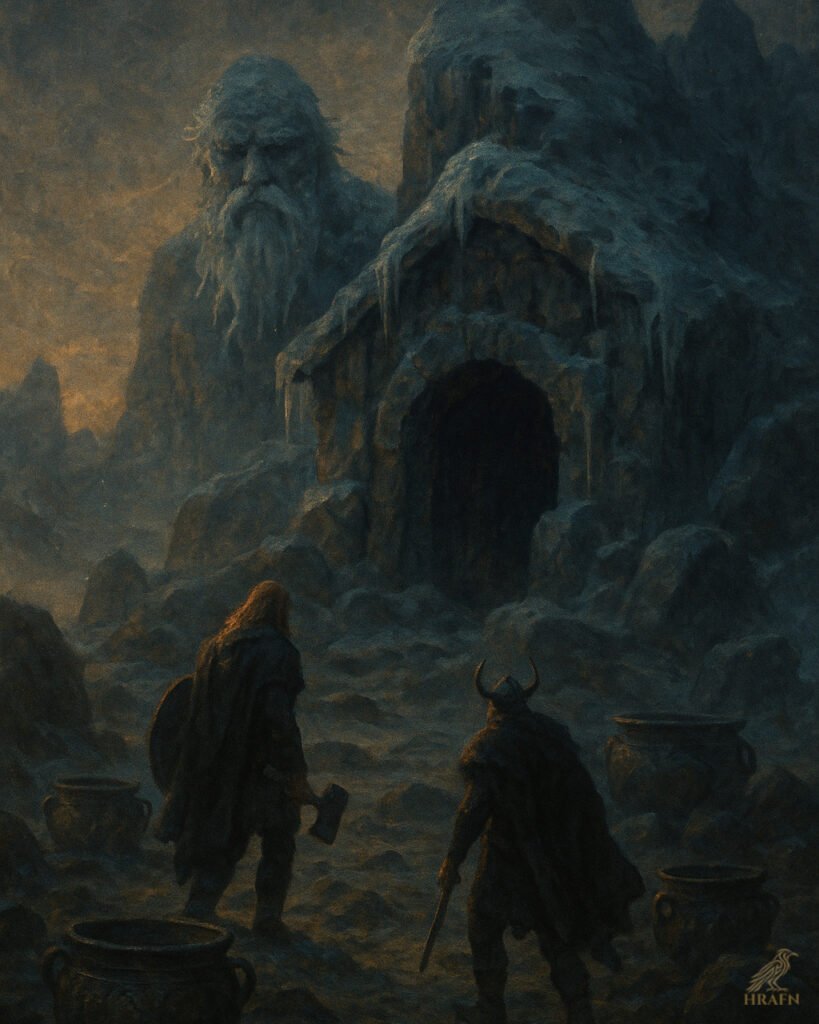
A feast without beer is no feast at all. With this simple problem begins one of the oldest poems of the Edda. No war, no betrayal – just an empty vessel that sets an entire story in motion.
The Search for the Cauldron
The gods cast lots. The choice falls on Aegir, the giant of the sea. He is to host the next feast. But Aegir hesitates. He needs a cauldron – one so large it can brew for all the gods at once. Who owns such a vessel?
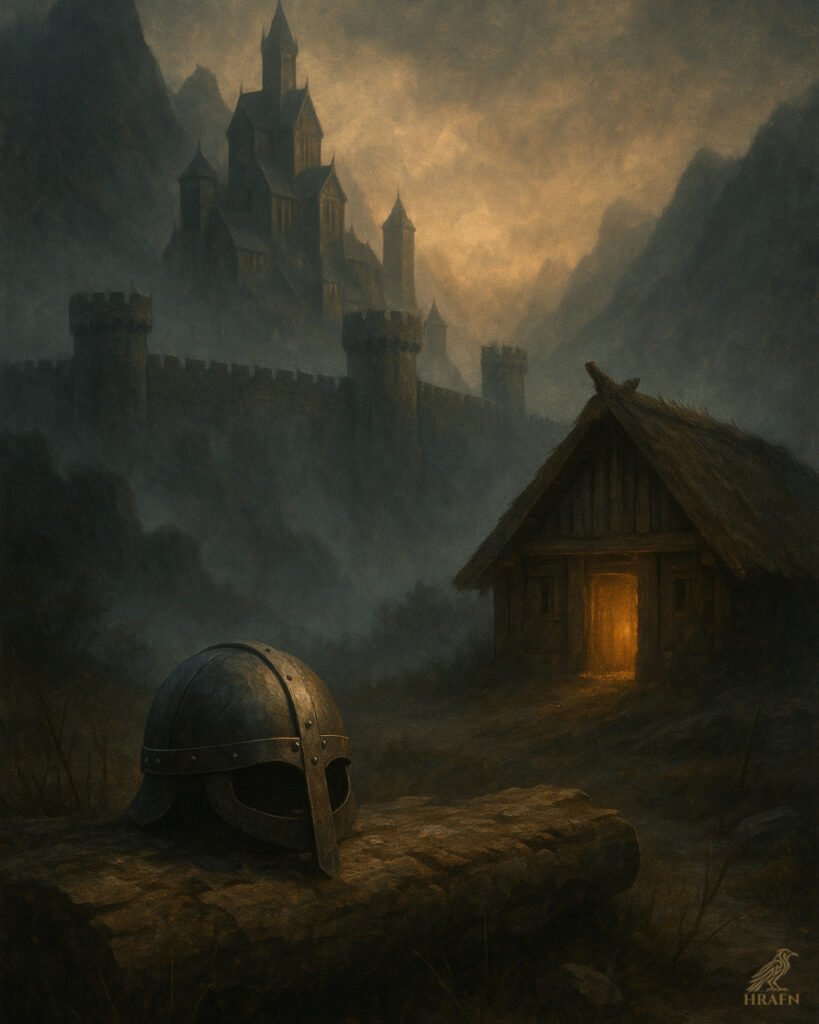
Tyr remembers. His father Hymir guards exactly such a cauldron. It stands at the edge of the world, far to the east, beyond the icy rivers of Elivagar. A mile deep, it is said – almost unimaginable.
In the Giant’s House
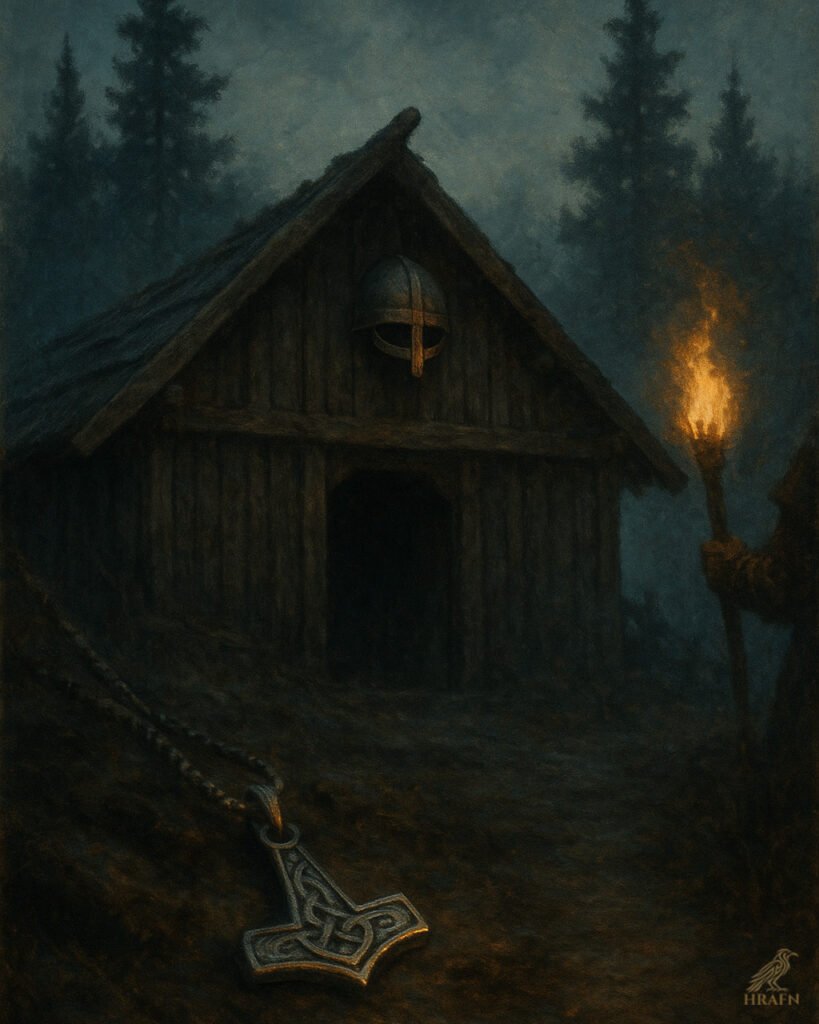
Thor and Tyr set out toward the east. There an ancient woman with nine hundred heads receives them. But the lady of the house – adorned in gold and wiser than the ancestress – hides the two gods beneath cauldrons.
Then Hymir comes home. The ice in his beard rattles with every step. A single glance from him shatters a ceiling beam. Eight cauldrons shatter instantly. Only one holds – the hardest, forged for exactly such a moment.
Thor shows his appetite: he devours two whole oxen. Then he seizes the black bull Himinhrjod and tears off its head. With this head as bait, he rows out to sea – for his famous fishing trip against the Midgard Serpent.
The Final Test
Back in the house, Hymir sets one last task: an unbreakable cup must be shattered. No strength in the world can crack it – until Thor hurls it against Hymir’s own skull. Only there does the vessel finally shatter.
The giant gives in. The cauldron now belongs to the gods.
Thor hoists it onto his head. The rings on the cauldron strike his heels with every step. But the matter is not over yet: many-headed giants, allies of Hymir, pursue the pair. Mjolnir, Thor’s hammer, silences them all – for good.
What Remains
The story appears in the Hymiskvida, a poem from the Poetic Edda dating to the late 13th century. The fishing motif even appears carved in stone – on picture stones at Altuna, Hordum, Ardre VIII, and Gosforth. One contradiction remains: here Hymir is Tyr’s father, while in the Skaldskaparmal, Odin is named as his father instead. Even the title “theft” doesn’t date back to the Viking Age – it’s a modern addition.
What remains is a simple lesson that still holds true: whoever wants to drink must first walk into the giant’s house.
Sources
This tale has been passed down mainly through the Poetic Edda and Snorri Sturluson’s Prose Edda. As with all orally transmitted myths, the material was only written down centuries after it originated, so later influences and differing versions cannot be ruled out.